Pomegranate Braised Short Ribs with Creamy Polenta
These pomegranate braised short ribs are the definition of comfort food elegance. The meat becomes incredibly tender after hours of slow braising, while the pomegranate juice adds a beautiful sweet-tart complexity that balances the richness of the beef. Served over creamy polenta with jewel-like pomegranate arils, this dish is guaranteed to impress at your next dinner party or holiday gathering.

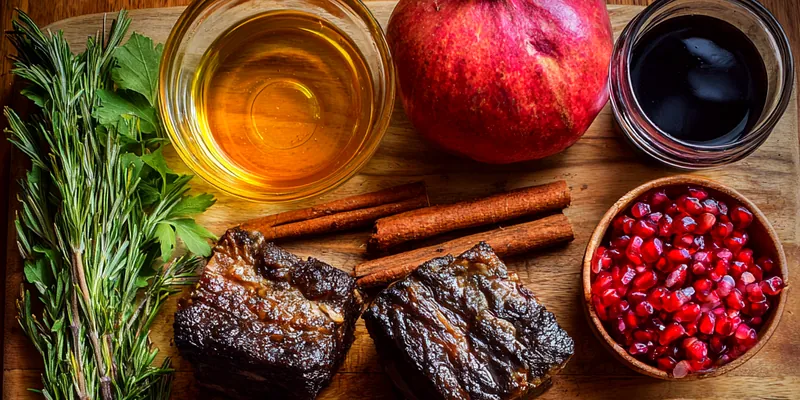
Why This Braised Short Ribs Recipe Works
Braising is one of the most forgiving and rewarding cooking techniques for tough cuts of meat like short ribs. The low, slow cooking process breaks down the connective tissue and collagen, transforming the meat into something incredibly tender and flavorful. The combination of pomegranate juice and red wine creates a complex braising liquid that's both fruity and savory, with natural acidity that helps tenderize the meat while building layers of flavor. The addition of aromatics like thyme, bay leaves, and cinnamon adds warmth and depth without overpowering the star ingredients.
What makes this recipe particularly special is the reduction of the braising liquid into a glossy, restaurant-quality sauce. As the liquid reduces, the flavors concentrate and intensify, creating a silky coating that clings beautifully to the meat. The creamy polenta provides the perfect canvas for soaking up all that delicious sauce, while its mild flavor balances the boldness of the ribs. The final garnish of fresh pomegranate arils adds a pop of color, texture, and bright acidity that ties the whole dish together.
💡 Professional Tip
For the deepest flavor, sear your short ribs until they develop a dark, caramelized crust. Don't rush this step – those browned bits (fond) on the bottom of the pot are pure flavor gold that will dissolve into your braising liquid.
Frequently Asked Questions
Absolutely! This dish actually tastes even better the next day. Braise the short ribs up to 2 days in advance, then cool and refrigerate them in the braising liquid. When ready to serve, remove any solidified fat from the surface, reheat gently in a 325°F oven for 30-40 minutes, and make fresh polenta. The flavors will have melded beautifully during the resting time.
While pomegranate juice gives this dish its signature flavor, you can substitute with cranberry juice or cherry juice for a similar sweet-tart profile. You could also use all red wine and beef stock, though you'll lose that unique pomegranate character. If using 100% pomegranate juice (not cocktail), reduce the amount slightly as it can be quite concentrated.
Make sure your short ribs are completely dry before searing – moisture is the enemy of browning. Heat your Dutch oven until it's very hot, add oil, and work in batches if necessary to avoid crowding. Each side should sear for 3-4 minutes without moving the meat. You want a deep brown crust, not just light coloring. This caramelization is essential for building flavor.
Yes, boneless short ribs work well in this recipe, though they may cook slightly faster. Start checking for tenderness around 2 hours instead of 2.5 hours. Keep in mind that bone-in ribs tend to have more flavor due to the marrow in the bones, which enriches the braising liquid as it cooks.
The short ribs are done when the meat is fork-tender and pulls away from the bone with minimal resistance. Insert a fork into the thickest part – it should slide in easily and the meat should almost fall apart. The internal temperature should reach about 205°F. If there's any resistance or the meat feels tough, continue braising and check every 20 minutes.
While this recipe includes creamy polenta, you could also serve these short ribs over mashed potatoes, creamy grits, buttered egg noodles, or roasted root vegetables. For sides, consider roasted Brussels sprouts, glazed carrots, or a simple arugula salad with lemon vinaigrette to cut through the richness. A full-bodied red wine like Cabernet Sauvignon or Malbec pairs beautifully.
Yes! After searing the ribs and building your braising liquid on the stovetop, transfer everything to a slow cooker. Cook on low for 7-8 hours or high for 4-5 hours until tender. The advantage of oven braising is more even heat distribution, but a slow cooker offers convenience. You'll still want to reduce the sauce on the stovetop at the end for that glossy finish.
Store leftover short ribs in an airtight container submerged in the braising liquid to keep them moist. They'll keep in the refrigerator for up to 4 days. You can also freeze them for up to 3 months – thaw overnight in the refrigerator before reheating. Polenta is best made fresh, but you can refrigerate leftovers for 3 days and reheat with a splash of cream or milk to restore creaminess.
Recipe Troubleshooting Guide
Ribs Are Tough After Cooking
Problem: The short ribs are still tough and chewy after the suggested cooking time.
Solution: Simply continue braising – some ribs need more time depending on their size and the specific cut. Check every 20-30 minutes until fork-tender. Make sure your oven temperature is accurate (use an oven thermometer) and that the liquid is at a gentle simmer, not a rolling boil. Tough ribs just need more time to break down.
Sauce Is Too Thin
Problem: After reducing, the sauce is still watery and won't coat the meat properly.
Solution: Continue reducing the sauce over medium-high heat, stirring occasionally. It should reduce by half or more until it coats the back of a spoon. If you're in a hurry, mix 1 tablespoon cornstarch with 2 tablespoons cold water, whisk into the simmering sauce, and cook for 2 minutes until thickened. You can also add a tablespoon of butter at the end for extra body and shine.
Polenta Is Lumpy
Problem: The polenta has formed lumps and isn't smooth and creamy.
Prevention: Always add polenta to boiling water in a thin, steady stream while whisking constantly. If lumps do form, continue whisking vigorously or use an immersion blender to smooth it out. For future batches, make sure your water is at a full rolling boil before adding the polenta, and never stop stirring during the first few minutes.
Meat Is Falling Apart Too Much
Problem: The short ribs are so tender they're completely falling apart and difficult to serve.
Recovery: While very tender is good, over-braising can make meat mushy. Use a wide spatula or two utensils to carefully transfer ribs from pot to plate. In the future, start checking for doneness 30 minutes earlier. The meat should be tender but still hold together when you move it. If already overcooked, serve it more rustic-style as shredded meat over the polenta.
Dish Is Too Sweet
Problem: The pomegranate flavor is overpowering and the dish tastes too sweet.
Prevention: Balance sweetness by adding acid – stir in 1-2 tablespoons of red wine vinegar or fresh lemon juice to the sauce. You can also add a pinch of salt to help balance the flavors. If using pomegranate juice cocktail (which contains added sugar) instead of 100% juice, this might be the culprit. Use unsweetened pomegranate juice for better control over sweetness levels.
Flavor Balance Issues
Too Sweet: Add 1-2 tablespoons red wine vinegar or balsamic vinegar to the sauce to cut sweetness. A squeeze of fresh lemon juice also helps.
Too Salty: Dilute with additional unsalted beef stock or pomegranate juice. Add a diced potato to the sauce while simmering to absorb excess salt, then remove before serving.
Bland: Boost flavor by adding a splash more wine during reduction, a pat of butter for richness, or a sprinkle of fresh thyme. Season with additional salt and freshly cracked black pepper.

Choosing Quality Ingredients for Perfect Results
The quality of your short ribs makes all the difference in this dish. Look for well-marbled bone-in beef short ribs (also called English-cut short ribs) that are at least 2 inches thick. The marbling – those white streaks of fat running through the meat – is what keeps the ribs moist and flavorful during the long cooking process. Visit a butcher shop if possible, where you can request specific cuts and get advice on the best options. If buying from a supermarket, look for ribs with bright red meat and creamy white fat, avoiding any with brown or gray patches.
For the pomegranate juice, opt for 100% pure pomegranate juice without added sugars or flavors – brands like POM Wonderful work beautifully. The juice should be deep ruby red and taste both sweet and tart. When selecting your red wine, choose something you'd actually enjoy drinking – a medium to full-bodied option like Cabernet Sauvignon, Merlot, or Syrah works best. You don't need an expensive bottle, but avoid cooking wine, which often contains added salt and inferior flavor. For the polenta, traditional coarse-ground yellow polenta provides the best texture and corn flavor, though instant polenta works in a pinch if you're short on time.
Essential Ingredient Notes
- Beef Short Ribs: Choose bone-in English-cut short ribs that are 2-3 inches thick with visible marbling. Ask your butcher to cut them uniformly so they cook evenly. Plan for about 2/3 to 1 pound per person. Let ribs sit at room temperature for 30 minutes before searing for even cooking.
- Pomegranate Juice: Use 100% pure pomegranate juice with no added sugars or cocktail mixes. Look for juice that's deep red in color and has both sweet and tart notes. Taste it before using – if it's too sweet, reduce the amount slightly or add a splash of lemon juice for balance.
- Polenta: Traditional coarse-ground polenta takes 25-30 minutes to cook but delivers superior texture and corn flavor. Medium-grind polenta works well too. Avoid instant polenta if possible – while convenient, it lacks the creamy texture of slow-cooked traditional polenta. Store polenta in an airtight container in a cool, dry place.

Mastering the Art of Braising
Braising is a two-stage cooking method that starts with high heat searing and finishes with low, slow cooking in liquid. The initial sear is crucial – it creates a caramelized crust on the meat through the Maillard reaction, developing complex flavors that will permeate the entire dish. Don't rush this step or skip it to save time; those deeply browned bits stuck to the pot (called fond) are pure concentrated flavor that dissolves into your braising liquid. The key is using high heat and not moving the meat until it naturally releases from the pot, which indicates proper browning has occurred.
Once the ribs are seared and the braising liquid is built, the magic happens in the oven. Low, even heat (around 325°F) allows the tough collagen in the meat to slowly convert to gelatin, which gives the finished dish its luxurious, silky texture. The covered pot creates a moist environment that bastes the meat continuously as moisture evaporates and condenses on the lid, dripping back down. Resist the urge to check too frequently – every time you remove the lid, you lose heat and moisture. Check once around the halfway point to turn the ribs, then again toward the end to test for doneness. Patience is rewarded with meat so tender it practically melts on your tongue.
Deglazing and Building Braising Liquid
After searing your ribs and sautéing the aromatics, deglazing is the process of adding liquid to the hot pan to dissolve all those flavorful browned bits stuck to the bottom. Pour in your wine first and use a wooden spoon to scrape up the fond, which will dissolve into the liquid. This technique captures all that concentrated flavor and ensures nothing goes to waste. Then add your pomegranate juice and stock, bringing everything to a simmer before adding back the meat. The combination of acidic wine, fruity pomegranate juice, and rich stock creates a perfectly balanced braising environment.
Pomegranate Braised Short Ribs with Creamy Polenta
📋 Ingredients
For the Short Ribs
- 4 pounds bone-in beef short ribsChoose English-cut ribs, at least 2 inches thick
- 2 tablespoons olive oilFor searing the ribs
- 1 large yellow onion, dicedAbout 2 cups diced
- 4 cloves garlic, mincedFresh garlic only, no jarred
- 2 cups pomegranate juiceUse 100% pure juice, no cocktail
- 1 cup dry red wineCabernet Sauvignon or Merlot works well
- 2 cups beef stockLow-sodium preferred for better control
- 3 sprigs fresh thymeTie with kitchen twine for easy removal
- 2 bay leavesRemove before serving
- 1 cinnamon stickAdds warmth without being overpowering
- Salt and black pepper to tasteSeason generously
For the Polenta
- 1 cup polentaCoarse-ground traditional polenta preferred
- 4 cups waterCan substitute half with milk for extra creaminess
- 1/2 cup heavy creamAdds richness to finished polenta
- 3 tablespoons butterUnsalted butter preferred
- 1/2 cup fresh pomegranate arilsFor garnish, adds fresh burst of flavor
Instructions
Sear the Short Ribs
Pat short ribs dry with paper towels and season generously with salt and pepper on all sides. Heat olive oil in a large Dutch oven over medium-high heat until shimmering. Working in batches if necessary to avoid crowding, sear ribs on all sides until deeply browned and caramelized, about 3-4 minutes per side. Remove ribs to a plate and set aside.
Build the Braising Liquid
In the same Dutch oven (don't wipe it out), add diced onion and cook over medium heat until softened and translucent, about 5 minutes. Add minced garlic and cook for 1 minute until fragrant, stirring constantly. Pour in red wine and pomegranate juice, using a wooden spoon to scrape up all the browned bits from the bottom of the pot. Add beef stock, fresh thyme sprigs, bay leaves, and cinnamon stick. Bring the mixture to a simmer.
Braise the Ribs
Preheat your oven to 325°F. Return the seared short ribs to the Dutch oven, nestling them into the braising liquid. The liquid should come about three-quarters up the sides of the meat. Cover with a tight-fitting lid and carefully transfer to the preheated oven. Braise for 2.5 to 3 hours, turning the ribs carefully halfway through cooking, until the meat is fork-tender and nearly falling off the bone.
Make the Creamy Polenta
About 30 minutes before the ribs are finished cooking, prepare the polenta. Bring 4 cups of water and 1 teaspoon salt to a rolling boil in a large saucepan. Gradually whisk in the polenta in a thin, steady stream to prevent lumps. Reduce heat to low and cook, stirring frequently with a wooden spoon, for 25-30 minutes until thick, creamy, and no longer gritty. Stir in heavy cream and butter until fully incorporated. Keep warm.
Reduce the Pomegranate Sauce
Carefully remove the short ribs from the Dutch oven and tent loosely with aluminum foil to keep warm. Strain the braising liquid through a fine-mesh sieve into a medium saucepan, pressing on the solids to extract maximum flavor. Discard the solids. Bring the liquid to a boil over medium-high heat and reduce by half, about 12-15 minutes, until the sauce is thick enough to coat the back of a spoon. Season with salt and pepper to taste.
Plate and Serve
Spoon a generous portion of creamy polenta onto each serving plate or shallow bowl. Using a wide spatula, carefully place one or two short ribs on top of the polenta. Drizzle generously with the reduced pomegranate sauce, allowing it to pool around the polenta. Garnish with fresh pomegranate arils for a pop of color and texture. Serve immediately while hot.
Recipe Notes & Tips
Storage
Store leftover short ribs in an airtight container, submerged in the braising liquid, in the refrigerator for up to 4 days. The fat will solidify on top, which you can remove before reheating. Reheat gently in a covered dish at 325°F for 30-40 minutes. You can also freeze the ribs in their liquid for up to 3 months. Thaw overnight in the refrigerator before reheating. Polenta is best served fresh but can be refrigerated for 3 days; reheat with a splash of cream or milk.
Serving Suggestions
This dish pairs beautifully with simple sides that won't compete with its bold flavors. Consider roasted Brussels sprouts with balsamic glaze, honey-glazed carrots, or sautéed green beans with garlic. A crisp arugula salad with lemon vinaigrette provides a refreshing contrast. For wine pairing, choose a full-bodied red like Cabernet Sauvignon, Malbec, or Syrah that can stand up to the richness of the meat and complement the pomegranate notes.
Variations
Try substituting cranberry juice or cherry juice for a different fruity profile. For a Middle Eastern twist, add 1/2 teaspoon ground cumin and 1/4 teaspoon coriander to the braising liquid. You can also serve these ribs over mashed potatoes, creamy grits, or buttered egg noodles instead of polenta. For a lighter option, serve over cauliflower mash. Add orange zest to the sauce reduction for a citrusy brightness that pairs well with pomegranate.