Herb-Crusted Beef Tenderloin with Garlic Butter Sauce
Succulent herb-crusted beef tenderloin roasted to perfection with a rich garlic butter sauce. Restaurant-quality elegance for special occasions and holidays.

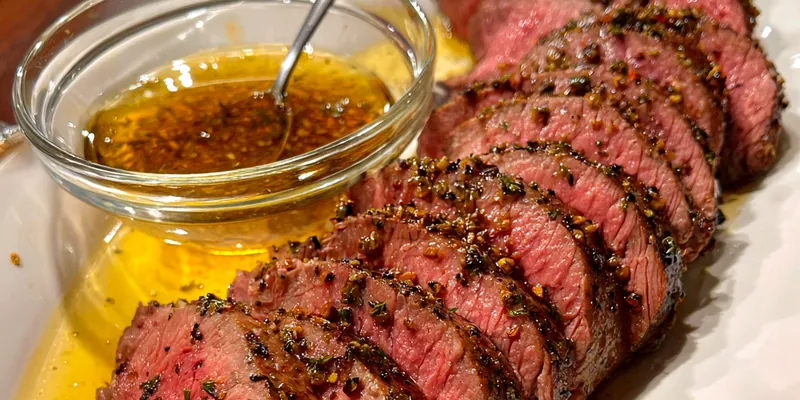
Mastering the Perfect Roast
The key to exceptional beef tenderloin is starting with quality meat at room temperature and creating a flavorful herb crust that forms a golden exterior while keeping the interior tender and juicy. The combination of fresh herbs, garlic, and Dijon mustard creates complex flavors that complement the beef's natural richness.
Searing the beef before roasting creates a beautiful caramelized crust through the Maillard reaction. This step locks in juices and adds depth of flavor. The high-heat roasting method ensures a perfect medium-rare center while developing the herb crust to aromatic perfection.
💡 Professional Tip
Use a reliable meat thermometer and remember that the internal temperature will rise 5-10°F during resting. Remove the beef from the oven when it's 5 degrees below your target temperature for perfect doneness.
Frequently Asked Questions
Choose center-cut beef tenderloin (also called Chateaubriand) for the most uniform shape and consistent cooking. It should be well-marbled with bright red color and minimal silver skin.
Use a meat thermometer inserted into the thickest part. Remove at 125°F for medium-rare or 135°F for medium. The temperature will rise 5-10°F while resting.
You can apply the herb crust up to 24 hours ahead and refrigerate. Bring to room temperature before cooking. The sauce can be made ahead and gently reheated before serving.
Resting allows juices to redistribute throughout the meat. Cutting immediately causes juices to run out, resulting in dry meat. Always rest for 10-15 minutes, tented with foil.
Sear the beef in any skillet, then transfer to a roasting pan or baking sheet for the oven. The searing step is important for flavor and crust development.
Fresh herbs are strongly recommended for best flavor and appearance. If using dried, use 1/3 the amount as dried herbs are more concentrated. The crust won't be as vibrant.
Classic accompaniments include roasted potatoes, green beans, asparagus, or creamed spinach. The rich meat pairs beautifully with lighter vegetables and starchy sides.
Store sliced beef in an airtight container with sauce for up to 3 days. Reheat gently in a low oven (250°F) or serve cold in sandwiches. Don't microwave as it overcooks the meat.
Recipe Troubleshooting Guide
Overcooked Exterior
Problem: Herb crust burns before meat is cooked through
Solution: Lower oven temperature to 400°F and cook longer. You can also tent with foil if the crust is browning too quickly while the center cooks.
Uneven Cooking
Problem: One end is overcooked while the other is underdone
Solution: Ensure tenderloin is uniform thickness by tucking and tying the thinner end. Choose center-cut for most even cooking. Rotate pan halfway through roasting.
Dry Meat
Problem: Beef turns out dry instead of juicy
Prevention: Don't overcook - use a thermometer and remove at proper temperature. Always rest the meat before slicing. Avoid lean cuts and ensure beef is at room temp before cooking.
Weak Sear
Problem: Not getting a good brown crust when searing
Recovery: Pat beef completely dry before searing. Use high heat and don't move the beef until a crust forms. Ensure pan is very hot before adding beef.
Sauce Too Thin
Problem: Garlic butter sauce is watery
Prevention: Simmer longer to reduce and concentrate flavors. Add butter gradually, whisking to emulsify. A small amount of cornstarch slurry can help thicken if needed.
Flavor Balance Issues
Too Sweet: Beef tenderloin shouldn't be sweet, but if sauce is, add lemon juice or vinegar
Too Salty: Rinse herb crust off before cooking or use unsalted butter in sauce and reduce added salt
Bland: Increase garlic, herbs, and black pepper in crust. Finish with flaky sea salt and fresh herbs

Selecting Premium Beef
Quality beef tenderloin is essential for this dish. Choose USDA Choice or Prime grade with good marbling throughout. The center-cut portion ensures uniform thickness for even cooking. Ask your butcher to trim the silver skin and excess fat, or do it yourself with a sharp knife.
Fresh herbs make all the difference in creating an aromatic, flavorful crust. The combination of parsley, thyme, and rosemary provides the perfect balance of earthiness and brightness. Use high-quality European butter for the sauce - the higher fat content creates a richer, more luxurious result.
Essential Ingredient Notes
- Beef Selection: Look for center-cut tenderloin with bright red color and fine marbling. It should feel firm to touch. Plan for 6-8 ounces per person for main course servings.
- Fresh Herbs: Use fresh herbs, not dried, for the crust. The moisture and vibrant flavor of fresh herbs create the signature appearance and taste. Chop finely for even distribution.
- Quality Butter: European-style butter with 82% butterfat creates a richer sauce than standard butter. Unsalted butter lets you control the seasoning precisely.

The Art of Perfect Timing
Temperature control is everything when cooking beef tenderloin. Starting with room temperature meat ensures even cooking from edge to center. The initial high-heat sear creates the crust, while the oven roasting gently brings the interior to the perfect temperature without overcooking the exterior.
Using a meat thermometer eliminates guesswork and ensures consistent results. Insert it into the thickest part of the beef, being careful not to touch any bones or the pan. Remember that carryover cooking will raise the temperature during resting, so remove the beef 5 degrees before your target.
The Perfect Sear
Heat the skillet until nearly smoking. Pat beef completely dry for maximum browning. Sear each side for 2-3 minutes without moving - patience creates the perfect golden crust.
Herb-Crusted Beef Tenderloin with Garlic Butter Sauce
📋 Ingredients
For the Beef Tenderloin
- 115g unsalted butterEuropean-style preferred for richness
- 60ml beef brothAdds savory depth to sauce
- 30ml fresh lemon juiceBrightens and balances richness
- 2 cloves garlic, mincedFresh garlic for aromatic sauce
- Fresh parsley, choppedFor color and fresh herb flavor
- Flaky sea saltFor elegant finishing touch
For the Garlic Butter Sauce
- 1.4kg beef tenderloin, center cutBest quality you can find
- 45ml olive oilFor herb crust and searing
- 4 cloves garlic, mincedFresh is essential for crust
- 30g fresh parsley, choppedVibrant green herb component
- 15g fresh thyme leavesEarthy aromatic herb
- 15g fresh rosemary, mincedPine-like fragrance complements beef
- 15ml Dijon mustardHelps herbs adhere to meat
Instructions
Prepare the Beef
Remove beef tenderloin from refrigerator 1 hour before cooking to bring to room temperature. Pat completely dry with paper towels. Trim any excess fat or silver skin. Tie with kitchen twine at 2-inch intervals to ensure even cooking.
Make Herb Crust
In a small bowl, combine 2 tablespoons olive oil, minced garlic, parsley, thyme, rosemary, Dijon mustard, black pepper, salt, and paprika. Mix into a paste. Rub the herb paste all over the beef, coating evenly on all sides.
Sear the Tenderloin
Preheat oven to 425°F (220°C). Heat remaining 1 tablespoon olive oil in a large oven-safe skillet over high heat. Sear beef on all sides until golden brown, about 2-3 minutes per side. This creates a flavorful crust.
Roast to Perfection
Transfer skillet to preheated oven. Roast for 25-35 minutes until internal temperature reaches 125°F (52°C) for medium-rare or 135°F (57°C) for medium. Remove from oven, transfer to cutting board, tent with foil, and rest for 10-15 minutes.
Make Garlic Butter Sauce
While beef rests, melt butter in a small saucepan over medium heat. Add minced garlic and cook for 1 minute until fragrant. Add beef broth and lemon juice, simmer for 2 minutes. Stir in chopped parsley. Season with salt and pepper to taste.
Slice and Serve
Remove twine from beef. Slice into 1/2-inch thick medallions. Arrange on a platter, drizzle with some garlic butter sauce, and serve remaining sauce on the side. Garnish with fresh parsley and flaky sea salt.
Recipe Notes & Tips
Make-Ahead Tips
Apply the herb crust up to 24 hours ahead and refrigerate covered. Remove from refrigerator 1 hour before cooking. The sauce can be made ahead and gently reheated, adding fresh parsley just before serving.
Wine Pairing
This elegant beef pairs beautifully with full-bodied red wines like Cabernet Sauvignon, Bordeaux, or Malbec. The rich flavors complement the herb crust and buttery sauce perfectly.
Leftover Ideas
Leftover tenderloin makes incredible sandwiches with horseradish cream, or can be sliced thin for elegant salads. It's also excellent served cold with mustard sauce as part of a charcuterie board.