Gourmet Pesto Chicken Pizza with Fresh Mozzarella
This gourmet pesto chicken pizza brings restaurant-quality flavor to your home kitchen with minimal effort. The combination of aromatic basil pesto, tender seasoned chicken, and creamy fresh mozzarella creates a sophisticated alternative to traditional red sauce pizzas. Whether you're looking for an impressive weeknight dinner or entertaining guests, this pizza delivers bold flavors and a beautiful presentation that will have everyone asking for seconds.


Why This Pesto Chicken Pizza Works
Traditional pizza relies on tomato sauce as its flavor foundation, but pesto creates an entirely different taste profile that's equally satisfying. The herbaceous, garlicky notes of basil pesto complement chicken beautifully without overwhelming it. Unlike heavier meat toppings, chicken's mild flavor allows the pesto to shine while adding essential protein. The key is using quality pesto—whether homemade or a premium store-bought version—because it serves as the flavor backbone of the entire pizza.
The cooking technique for this pizza differs slightly from traditional pizzas. The high heat and short baking time ensure the crust develops that coveted crispy exterior while maintaining a tender interior. Pre-cooking the chicken is essential because raw chicken wouldn't cook through in the brief baking time. By seasoning the chicken before adding it to the pizza, we build layers of flavor that create complexity in every bite. The fresh mozzarella melts beautifully at high heat, creating those irresistible cheese pulls without becoming greasy.
💡 Professional Tip
For the best crust texture, let your pizza dough come to room temperature for at least 30 minutes before stretching. Cold dough is difficult to work with and tends to shrink back. If your dough keeps snapping back, let it rest for 5 minutes before continuing to stretch.
Frequently Asked Questions
You can prepare components ahead: cook and season the chicken up to 2 days in advance, and store it refrigerated in an airtight container. The pesto keeps for a week in the refrigerator with a thin layer of olive oil on top to prevent browning. However, assemble and bake the pizza fresh for the best texture. Pre-assembled pizzas tend to develop soggy crusts as the pesto and cheese release moisture.
If fresh mozzarella isn't available, low-moisture whole milk mozzarella works well and creates a slightly firmer texture with less moisture release. Shred it yourself rather than buying pre-shredded for better melting. You could also use a combination of fontina and mozzarella for extra flavor. Avoid using only hard cheeses like Parmesan, as they don't provide that creamy, melty texture that makes pizza special.
A preheated pizza stone produces the crispiest crust because it absorbs moisture and distributes heat evenly, mimicking a professional pizza oven. However, a heavy-duty baking sheet or cast iron pan works well too. If using a baking sheet, preheat it for 5 minutes in the oven before sliding the pizza onto it. This prevents a soggy bottom crust and promotes even browning.
Absolutely! Rotisserie chicken is a fantastic time-saver and adds extra flavor. Remove the skin, shred the meat, and proceed with the recipe. Since rotisserie chicken is already seasoned and sometimes saltier, taste before adding additional salt. You'll need about half a rotisserie chicken to yield the 2 cups of meat required for this recipe.
Your pizza is ready when the crust is golden brown with darker spots around the edges, the cheese is completely melted and bubbling with light golden-brown patches, and the bottom crust sounds hollow when tapped. The internal crust temperature should reach around 190°F. If the cheese is browning too quickly but the crust isn't done, tent the pizza loosely with foil for the final few minutes of baking.
This pizza pairs beautifully with a simple arugula salad dressed with lemon vinaigrette to cut through the richness. Roasted vegetables like broccolini or asparagus complement the Italian flavors. For a complete meal, start with an antipasto platter or caprese salad. Wine-wise, try a crisp Pinot Grigio or a light-bodied red like Chianti that won't overpower the pesto's delicate flavors.
This recipe adapts wonderfully to vegetarian preferences. Replace the chicken with roasted vegetables like zucchini, bell peppers, cherry tomatoes, or artichoke hearts. You could also use white beans or chickpeas for protein. Roasted mushrooms add a meaty texture that satisfies. Just ensure vegetables are pre-cooked and not too wet, or they'll make the crust soggy. Pat them dry before adding to the pizza.
Store leftover pizza in an airtight container in the refrigerator for up to 3 days. For best results, place parchment paper between slices to prevent sticking. Reheat in a preheated 375°F oven for 8-10 minutes until the cheese is melted and the crust crisps up again. Avoid microwaving, as it makes the crust chewy and tough. You can also reheat in a covered skillet over medium heat for a crispy bottom crust.
Recipe Troubleshooting Guide
Soggy Crust
Problem: The bottom of your pizza is soft and wet instead of crispy, even after the recommended baking time.
Solution: This usually happens when the oven isn't hot enough or the pizza has too much moisture. Ensure your oven is fully preheated to 475°F before baking. Use less pesto (about 1/3 cup instead of 1/2 cup) or spread it thinner. Pat fresh mozzarella dry with paper towels before adding it to reduce moisture. If using a baking sheet, preheat it in the oven for 5 minutes before adding the pizza, or switch to a pizza stone for better heat distribution.
Cheese Not Melting Properly
Problem: The cheese stays clumpy and doesn't melt into that beautiful, stretchy layer you want.
Solution: Fresh mozzarella needs to be evenly distributed and not piled too thick in any one spot. Tear it into smaller, uniform pieces rather than large chunks. Ensure your oven temperature is accurate—use an oven thermometer to verify. If the cheese still won't melt, your mozzarella may be too cold; let it sit at room temperature for 15 minutes before using. Pre-shredded cheese contains anti-caking agents that inhibit melting, so always use block cheese you shred yourself.
Burnt Edges Before Center Cooks
Problem: The crust edges are burning while the center remains undercooked and pale.
Prevention: This indicates your oven's top heating element is too strong or positioned too close to the pizza. Move your oven rack to a lower position, typically the middle or lower-middle slot. You can also reduce the temperature slightly to 450°F and bake for 2-3 minutes longer. Create a foil shield around the edges if they're browning too quickly, or brush the edges with olive oil which helps them brown more evenly.
Dough Shrinking Back
Problem: When you stretch the dough, it keeps contracting and won't hold its shape.
Recovery: This happens when the gluten is too tight, usually because the dough is too cold or hasn't rested enough. Always let dough come to room temperature for at least 30 minutes before working with it. If it continues shrinking, cover it with a damp towel and let it rest for 10 minutes to relax the gluten. Stretch gently from the center outward using your knuckles rather than a rolling pin, which can make the dough tough. Never force it—patience is key.
Dry Chicken
Problem: The chicken pieces on your pizza are dry and tough rather than tender and juicy.
Prevention: Overcooking is the main culprit. Use leftover cooked chicken or specifically cook chicken just until done (165°F internal temperature) before adding to pizza. Dark meat (thighs) stays more moist than breast meat. Toss the chicken with olive oil and seasonings before adding it to the pizza—this coating helps retain moisture during the high-heat baking. Consider adding the chicken during the last 8-10 minutes of baking rather than from the start if you're using especially lean meat.
Flavor Balance Issues
Too Sweet: If your pesto tastes too sweet from the basil, balance it by adding a squeeze of fresh lemon juice or a pinch more salt and garlic to the pesto before spreading.
Too Salty: If the pizza tastes too salty, it's likely from the combination of Parmesan, mozzarella, and seasoned chicken. Reduce the Parmesan to 1/4 cup and don't add extra salt to the chicken if using rotisserie or pre-seasoned meat.
Bland: Bland pizza means you need to build more flavor layers. Add extra minced garlic to the chicken, use a more generous amount of Italian seasoning, include red pepper flakes for heat, and don't forget to salt the exposed crust edge before baking.
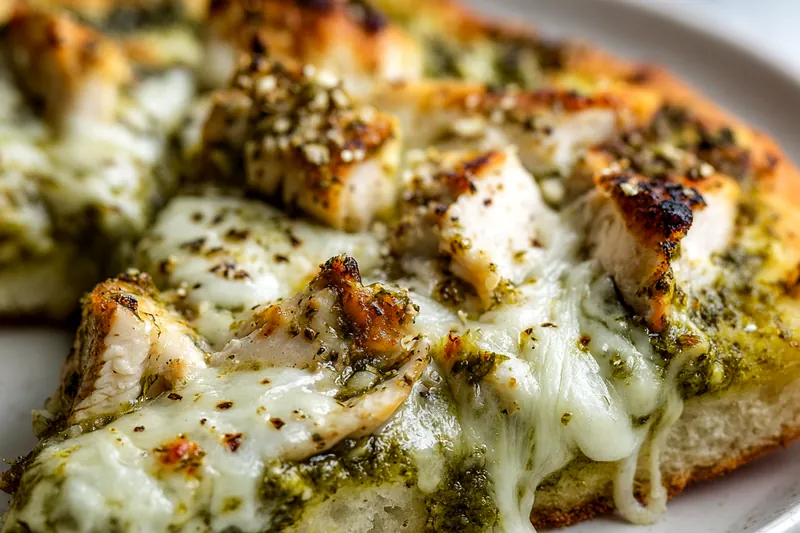
Selecting Quality Ingredients for Maximum Flavor
The foundation of exceptional pizza starts with your ingredients, and this is especially true for pesto-based pizzas where each component plays a starring role. When choosing pesto, look for versions with basil listed as the first ingredient and a vibrant green color—browning indicates oxidation and age. Fresh pesto from the refrigerated section typically offers better flavor than shelf-stable versions. If making your own, use fresh, aromatic basil leaves and quality extra virgin olive oil. The difference in flavor is remarkable and worth the extra effort or investment.
For chicken, freshly cooked chicken breast that you've prepared yourself gives you complete control over moisture and seasoning. However, don't overlook the convenience and flavor of rotisserie chicken, which brings added depth from its seasoning and cooking method. Fresh mozzarella, often sold in balls packed in water or whey, provides superior melting quality and flavor compared to the low-moisture variety. For the best results, buy it the day you plan to make the pizza and drain it thoroughly. Premium ingredients don't have to break the bank—a single splurge on quality pesto and fresh mozzarella transforms this from good to extraordinary.
Essential Ingredient Notes
- Basil Pesto: Choose pesto with a bright green color and fresh basil aroma. Refrigerate after opening and cover with a thin layer of olive oil to prevent oxidation. If making your own, lightly toast the pine nuts first to enhance their flavor, and add the garlic gradually—too much raw garlic can overpower the basil. Fresh pesto lasts about 5 days refrigerated or can be frozen in ice cube trays for up to 3 months.
- Fresh Mozzarella: Look for mozzarella packed in liquid with a slightly springy texture when pressed. Avoid dry or rubbery cheese. Before using, remove from liquid and pat completely dry with paper towels—excess moisture leads to soggy pizza. Tear it into irregular pieces rather than slicing for better distribution and more interesting texture. If you can only find large mozzarella balls, one 8-ounce ball equals about 2 cups torn.
- Cooked Chicken: For the most tender results, poach chicken breasts in seasoned broth until they just reach 165°F internal temperature, then let rest before shredding. Alternatively, rotisserie chicken provides excellent flavor and saves time. Dark meat (thighs) offers more moisture and flavor than breast meat but has slightly higher fat content. Whatever you choose, ensure the chicken is completely cooled before adding to pizza to prevent the cheese from melting prematurely.
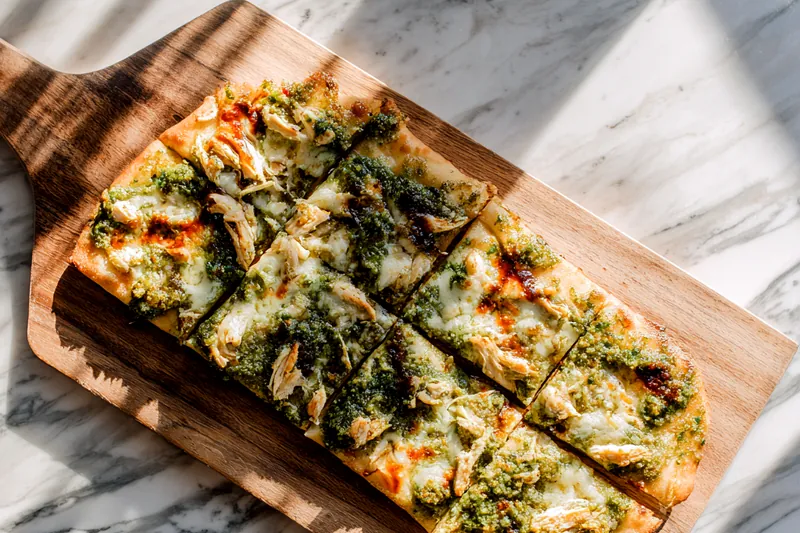
Mastering the Technique for Perfect Pizza
The secret to pizzeria-quality results at home lies in understanding heat management and timing. Professional pizza ovens reach 800°F or higher, which home ovens can't match, but we can compensate with technique. Preheating your oven for at least 30 minutes ensures the heating elements, oven walls, and pizza stone (if using) reach optimal temperature. This intense, even heat creates that characteristic crispy-yet-chewy crust texture. The high temperature also prevents toppings from releasing too much moisture, which is crucial when working with fresh mozzarella and pesto.
The assembly order matters more than you might think. Pesto goes directly on the dough to create a moisture barrier and flavor base. Adding chicken next allows it to heat through while keeping it from burning. Cheese goes on last so it melts evenly and creates that golden, bubbly top. Don't overload the pizza—less is actually more, as too many toppings weigh down the crust and prevent proper cooking. A light hand with toppings ensures every slice has the perfect balance of crust, sauce, and toppings, with each element remaining distinct yet harmonious.
The Perfect Stretch
Start with room-temperature dough on a lightly floured surface. Press the dough with your fingertips to flatten, leaving a thicker border around the edges. Pick up the dough and let gravity do the work—use your knuckles to gently stretch it while rotating, working from the center outward. This method preserves air bubbles in the crust for a lighter texture. If you tear the dough, pinch it back together. With practice, you'll achieve that restaurant-quality thin center with a puffy, airy crust edge.
Gourmet Pesto Chicken Pizza with Fresh Mozzarella
📋 Ingredients
Pizza Base
- 1/2 cup basil pestoHomemade or high-quality store-bought; should be bright green and aromatic
- 1 tablespoon olive oilExtra virgin olive oil for brushing crust edges
- 2 cloves garlic, mincedFresh garlic adds aromatic depth to the chicken
Toppings
- 1 pound pizza doughStore-bought or homemade, brought to room temperature for easy stretching
- 2 cups cooked chicken breast, shreddedRotisserie chicken works great; about half a chicken
- 2 cups fresh mozzarella cheese, tornPat dry to prevent soggy crust; tear into bite-sized pieces
- 1/2 cup Parmesan cheese, gratedFreshly grated provides best flavor and melting quality
- 1/2 teaspoon Italian seasoningBlend of oregano, basil, and thyme enhances flavor
- 1/4 teaspoon red pepper flakesOptional; adds subtle heat that complements pesto
- Fresh basil leavesFor garnish; adds fresh herbal notes and visual appeal
- Sea salt and black pepperTo taste; essential for proper seasoning
Instructions
Prepare the Oven and Dough
Preheat your oven to 475°F (245°C). If using a pizza stone, place it in the oven while preheating. On a lightly floured surface, stretch or roll the pizza dough into a 12-14 inch circle. Transfer to a parchment-lined baking sheet or pizza peel.
Apply Pesto Base
Spread the basil pesto evenly over the pizza dough, leaving a 1-inch border around the edges for the crust. Brush the exposed crust edge with olive oil and sprinkle with a pinch of sea salt.
Add Toppings
Toss the cooked chicken with minced garlic, Italian seasoning, salt, and pepper. Distribute the seasoned chicken evenly over the pesto. Scatter torn fresh mozzarella pieces across the pizza, then sprinkle with grated Parmesan cheese. Add red pepper flakes if desired.
Bake to Perfection
Transfer the pizza to the preheated oven or pizza stone. Bake for 15-18 minutes, until the crust is golden brown and the cheese is bubbling and lightly browned in spots. The internal temperature should reach 190°F for the crust.
Finish and Serve
Remove from the oven and let cool for 2-3 minutes. Garnish with fresh basil leaves, drizzle with a touch of olive oil if desired, and slice into 8 pieces. Serve immediately while hot and the cheese is still stretchy.
Recipe Notes & Tips
Storage
Store leftover pizza in an airtight container in the refrigerator for up to 3 days. Separate slices with parchment paper to prevent sticking. Reheat in a 375°F oven for 8-10 minutes for best results—this restores the crispy crust texture. Avoid microwaving as it makes the crust chewy. Pizza can also be frozen for up to 2 months; wrap individual slices tightly in plastic wrap, then place in a freezer bag. Reheat from frozen in a 400°F oven for 12-15 minutes.
Serving Suggestions
Serve this pizza alongside a crisp arugula salad with lemon vinaigrette to balance the richness. Roasted vegetables, garlic bread, or a simple caprese salad make excellent accompaniments. For beverages, pair with Italian white wine like Pinot Grigio or Vermentino, or try a light beer. If serving for a party, cut into smaller squares for appetizer portions. Finish the meal with tiramisu or gelato for an Italian-themed dinner.
Variations
Make it vegetarian by replacing chicken with roasted vegetables like zucchini, bell peppers, or artichoke hearts. Add sun-dried tomatoes for tangy sweetness. Try different cheeses—goat cheese or feta provide nice tanginess. For a spicier version, use arrabbiata sauce mixed with pesto or increase red pepper flakes. Grill the pizza on an outdoor grill for smoky flavor. Add pine nuts or walnuts for extra texture. For a white pizza variation, substitute pesto with ricotta mixed with garlic and herbs.