French Onion Mac & Cheese
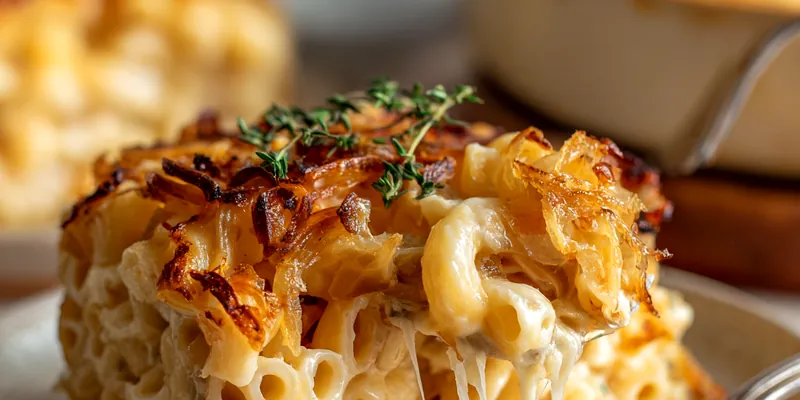
This French Onion Mac & Cheese transforms two beloved comfort foods into one incredible dish. Sweet caramelized onions meld with nutty Gruyère cheese and tender pasta in a velvety sauce that's pure indulgence. It's the ultimate upgrade to traditional mac and cheese, perfect for impressing guests or treating yourself to something special.

Why This French Onion Mac & Cheese Works
The secret to this recipe lies in properly caramelizing the onions. When you cook onions low and slow, their natural sugars break down and create deep, complex sweetness that perfectly balances the rich, savory cheese sauce. This process takes patience—usually 25-30 minutes—but it's absolutely worth every minute. The onions transform from sharp and pungent to mellow, sweet, and almost jammy in texture.
The cheese combination is equally important. Gruyère brings nutty, slightly sweet notes that echo traditional French onion soup, while mozzarella adds that irresistible stretch and creaminess. Parmesan contributes sharp, salty depth, and cream cheese ensures the sauce stays silky smooth without breaking. Together, these cheeses create a complex flavor profile that's both sophisticated and comforting, elevating this dish far beyond ordinary mac and cheese.
💡 Professional Tip
Don't rush the onion caramelization process. If they start to brown too quickly, reduce the heat and add a splash of water. The goal is deep golden-brown color and jammy texture, not burnt edges. Properly caramelized onions will be sweet, soft, and incredibly flavorful.
Frequently Asked Questions
Absolutely! You can prepare the entire dish up to the baking step, cover tightly with foil, and refrigerate for up to 24 hours. When ready to serve, bring to room temperature for 30 minutes, then bake at 375°F for 30-35 minutes until heated through and bubbly. You can also freeze the unbaked casserole for up to 2 months. Thaw overnight in the refrigerator before baking.
While Gruyère provides the signature French onion flavor, you can use Swiss cheese, Emmental, or even white cheddar as alternatives. Each will create a slightly different flavor profile—Swiss is milder, while white cheddar is sharper. For best results, use at least one cheese with good melting properties. Avoid pre-shredded cheese as it contains anti-caking agents that can make the sauce grainy.
The beef broth adds depth and savory richness that mimics traditional French onion soup. It enhances the caramelized onions and creates a more complex flavor profile than milk alone. If you prefer, you can substitute chicken broth or vegetable broth, though beef broth provides the most authentic French onion taste. You can also use all milk if you want a milder flavor.
Elbow macaroni is classic and works beautifully, but cavatappi (corkscrew pasta) is my favorite because its spiral shape catches and holds the cheese sauce and caramelized onions perfectly. Other great options include shells, campanelle, or gemelli. Choose pasta shapes with nooks and crannies that will capture the sauce. Avoid very small pasta like orzo or very large shapes like rigatoni.
The mac and cheese is done when the edges are bubbling vigorously, the top is golden brown with some darker caramelized spots, and the center is heated through. If you insert a knife into the center, it should come out hot. The total baking time is typically 20-25 minutes at 375°F. If the top is browning too quickly but the center isn't hot, tent with foil and continue baking.
This rich dish pairs wonderfully with light, fresh sides. A crisp green salad with vinaigrette helps cut through the richness. Roasted or steamed vegetables like green beans, broccoli, or Brussels sprouts provide a nice contrast. For a complete French bistro experience, serve with crusty baguette and a glass of dry white wine like Chardonnay or Sauvignon Blanc. It's also excellent as a side dish for roasted chicken or beef.
Yes! Simply replace the beef broth with vegetable broth or additional milk. The dish will be slightly less savory but still delicious. You can add a teaspoon of soy sauce or additional Worcestershire sauce (check that it's vegetarian) to boost the umami flavor. The caramelized onions provide plenty of depth on their own.
Store leftover French Onion Mac & Cheese in an airtight container in the refrigerator for up to 4 days. The texture may thicken as it cools because the cheese sauce solidifies. To reheat, add a splash of milk or cream and warm in the microwave in 1-minute intervals, stirring between each, or reheat in a covered oven-safe dish at 350°F for 15-20 minutes. You can also freeze portions for up to 3 months, though the texture may be slightly less creamy after thawing.
Recipe Troubleshooting Guide
Sauce Is Too Thick
Problem: The cheese sauce becomes too thick and pasty instead of creamy and pourable.
Solution: This happens when there's too much flour or the sauce has reduced too much. Gradually whisk in additional warm milk, a few tablespoons at a time, until you reach the desired consistency. The sauce should coat the back of a spoon but still flow easily. Remember, it will thicken slightly as it bakes, so err on the side of slightly thinner.
Sauce Is Grainy
Problem: The cheese sauce has a grainy, separated texture instead of being smooth.
Solution: This occurs when the cheese is added to sauce that's too hot or cooked too long after adding cheese. Always reduce heat to low before adding cheese, and stir gently just until melted. Use freshly shredded cheese rather than pre-shredded, as anti-caking agents cause graininess. If it happens, try blending the sauce smooth or whisking in a bit of cream cheese to help it come together.
Onions Burning Instead of Caramelizing
Problem: The onions are turning black and burnt instead of golden and sweet.
Prevention: Your heat is too high. Reduce to medium-low or even low heat. Caramelization is a slow process that requires patience. If onions start sticking or browning too quickly, add a tablespoon of water to the pan and scrape up the fond. Stir more frequently and don't walk away. Properly caramelized onions should take 25-30 minutes and be deeply golden, not dark brown or black.
Top Not Browning
Problem: The mac and cheese is cooked through but the top isn't golden brown.
Recovery: Finish the dish under the broiler for 2-3 minutes, watching carefully to prevent burning. Before broiling, you can sprinkle additional shredded cheese on top for extra browning. Make sure your oven rack is positioned in the upper third of the oven. Alternatively, increase oven temperature to 400°F for the last 5 minutes of baking.
Dish Is Too Dry
Problem: The baked mac and cheese comes out dry instead of creamy.
Prevention: The pasta may have absorbed too much sauce during baking, or the sauce wasn't creamy enough to begin with. Next time, make sure your cheese sauce is quite liquid before combining with pasta—it should almost seem too thin. Cover the dish with foil for the first 15 minutes of baking to prevent moisture loss. If it's already dry, drizzle with warm milk or cream before serving and let it absorb for a few minutes.
Flavor Balance Issues
Too Sweet: If the dish tastes too sweet from the caramelized onions, balance it with an extra splash of Worcestershire sauce, a pinch more salt, or a small squeeze of lemon juice to brighten the flavors.
Too Salty: If it's too salty, add a bit more cream cheese or a splash of heavy cream to mellow the saltiness. Next time, use low-sodium broth and taste before adding all the salt.
Bland: If the flavor is bland, the onions may not be caramelized enough, or you need more seasoning. Add extra Worcestershire sauce, Dijon mustard, a pinch of garlic powder, or more fresh thyme. Don't forget to season the pasta cooking water generously with salt.
Selecting the Best Ingredients
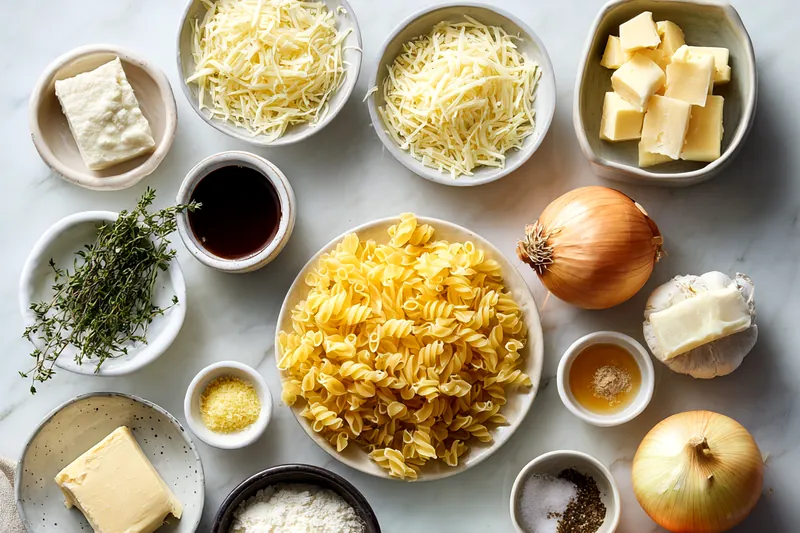
The quality of your ingredients directly impacts the final dish. Choose large, firm yellow onions with papery, unblemished skins—they have the best balance of sweetness and depth for caramelizing. Avoid red onions, which can turn muddy in color, or sweet onions like Vidalia, which may become too sweet. For the pasta, look for bronze-die cut varieties if available, as their rough surface helps sauce cling better than smooth, Teflon-die pasta.
When it comes to cheese, always buy blocks and shred them yourself. Pre-shredded cheese contains cellulose (an anti-caking agent) that prevents smooth melting and can make your sauce grainy. Gruyère can be pricey, but it's worth the investment for its unique nutty, slightly sweet flavor that defines this dish. Look for aged Gruyère (6-12 months) for the best flavor. If budget is a concern, use half Gruyère and half Swiss cheese rather than eliminating it entirely.
Essential Ingredient Notes
- Gruyère Cheese: Look for authentic Gruyère from Switzerland with the AOP label. It should have small holes and a firm, slightly grainy texture. The flavor is nutty and complex with a hint of sweetness. Buy it in a block and shred just before using. Store wrapped in parchment, then plastic, in the refrigerator's cheese drawer.
- Yellow Onions: Select heavy, firm onions with dry, papery skin and no soft spots or sprouting. Store in a cool, dark, well-ventilated place—not in the refrigerator. Slice uniformly (about 1/4-inch thick) so they caramelize evenly. Using a sharp knife minimizes tears and produces cleaner cuts.
- Whole Milk: Full-fat whole milk creates the creamiest sauce. Don't substitute low-fat or skim milk, as they lack the fat content needed for a rich, velvety texture. For an even more luxurious sauce, replace up to 1/2 cup of milk with heavy cream. Warm the milk slightly before adding to the roux to prevent lumps.
Mastering the Technique
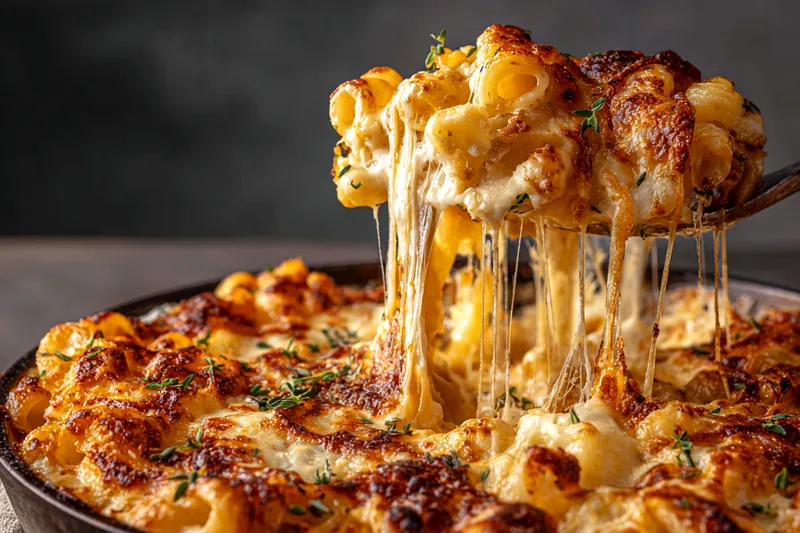
The key to perfect French Onion Mac & Cheese lies in mastering two essential techniques: caramelizing onions and making a smooth cheese sauce. For the onions, patience is crucial. Start with medium heat and plenty of fat (butter and oil) to prevent sticking. As the onions cook down, they'll release water and become translucent, then gradually turn golden. Stir every 3-5 minutes, scraping up any browned bits from the bottom of the pan. These fond bits add incredible flavor. If the pan gets too dry or the onions stick, add a tablespoon of water or broth.
For the cheese sauce, the roux (butter and flour mixture) is your foundation. Cook it for at least one minute to eliminate the raw flour taste, but don't let it brown. When adding liquids, whisk constantly to prevent lumps. The sauce should thicken enough to coat the back of a spoon before you add cheese. Always add cheese off heat or on very low heat, stirring gently until just melted—overheating causes separation and graininess. The sauce will seem thin, but remember, it thickens as it bakes and as the pasta absorbs liquid.
The Perfect Caramelization
True caramelization is a chemical process called the Maillard reaction, where the natural sugars in onions break down and create hundreds of new flavor compounds. This takes time and the right temperature—around 250-280°F at the pan surface. Signs of proper caramelization include a deep golden-brown color, jammy texture, and sweet, complex aroma. The onions should have reduced to about one-third of their original volume. Never rush this step by raising the heat, as you'll burn the onions rather than caramelize them, resulting in bitter, acrid flavors instead of sweet, rich ones.
French Onion Mac & Cheese
📋 Ingredients
For the Cheese Sauce
- 4 tablespoons unsalted butterDivided use - 2 tbsp for onions, 2 tbsp for roux
- 3 tablespoons all-purpose flourCreates the roux base for smooth sauce
- 2 cups whole milkWarm slightly before adding to prevent lumps
- 1 cup beef brothAdds savory French onion soup flavor
- 2 cups shredded Gruyère cheeseFreshly shredded from block, not pre-shredded
- 1 cup shredded mozzarella cheeseFor stretch and creaminess
- 1/2 cup grated Parmesan cheeseAdds sharp, salty depth
- 4 ounces cream cheese, cubedEnsures silky smooth texture
- 2 teaspoons Worcestershire sauceDeepens umami flavor
- 1 teaspoon Dijon mustardAdds subtle tang and complexity
- 1/2 teaspoon saltAdjust to taste
- 1/4 teaspoon black pepperFreshly ground preferred
- 1/4 teaspoon nutmegSecret ingredient for depth
For the Caramelized Onions
- 1 pound elbow macaroni or cavatappi pastaCook until al dente for best texture
- 3 large yellow onions, thinly slicedAbout 6 cups sliced, will reduce significantly
- 2 tablespoons olive oilCombined with butter prevents burning
- 4 cloves garlic, mincedAdd during last 2 minutes of caramelizing
- 1 teaspoon fresh thyme leaves, plus more for garnishFresh is best, but dried thyme (1/2 tsp) works
Instructions
Caramelize the Onions
In a large skillet over medium heat, melt 2 tablespoons butter with olive oil. Add sliced onions and cook for 25-30 minutes, stirring occasionally, until deeply caramelized and golden brown. Reduce heat if they begin to burn. Add minced garlic during the last 2 minutes of cooking. Set aside.
Cook the Pasta
Bring a large pot of generously salted water to a rolling boil. Add pasta and cook according to package directions until al dente, typically 8 minutes. Drain well and set aside. Do not rinse—the starch helps the sauce cling to the pasta.
Make the Cheese Sauce
In a large pot or Dutch oven over medium heat, melt remaining 2 tablespoons butter. Whisk in flour and cook for 1 minute, stirring constantly. Gradually whisk in milk and beef broth, continuing to whisk until smooth and no lumps remain. Cook, stirring frequently, until sauce thickens enough to coat the back of a spoon, about 5 minutes. Reduce heat to low. Stir in Gruyère, mozzarella, Parmesan, and cream cheese, stirring gently until completely melted and smooth. Stir in Worcestershire sauce, Dijon mustard, thyme, salt, pepper, and nutmeg.
Combine and Bake
Preheat oven to 375°F. Gently fold the caramelized onions and cooked pasta into the cheese sauce until everything is evenly coated. Transfer mixture to a greased 9x13-inch baking dish or large cast iron skillet. If desired, sprinkle additional Gruyère or mozzarella on top for extra golden crust. Bake uncovered for 20-25 minutes until bubbly around the edges and golden brown on top. Let rest for 5 minutes before serving to allow sauce to set slightly. Garnish with fresh thyme leaves.
Recipe Notes & Tips
Storage
Store leftovers in an airtight container in the refrigerator for up to 4 days. Reheat individual portions in the microwave with a splash of milk, or reheat the entire dish covered in a 350°F oven for 20 minutes. Can be frozen for up to 3 months; thaw in refrigerator overnight before reheating.
Serving Suggestions
Serve as a main dish with a simple green salad and crusty bread, or as a side dish alongside roasted chicken, grilled steak, or pork chops. Pairs beautifully with roasted vegetables like Brussels sprouts or green beans. For beverages, try a crisp white wine like Chardonnay or Sauvignon Blanc.
Variations
Add crispy bacon bits for French Onion Bacon Mac. Stir in sautéed mushrooms for earthy depth. Top with French-fried onions before baking for extra crunch. Make it lighter by using half-and-half instead of cream cheese and reducing cheese by 25%. Try different pasta shapes like shells or rotini for variety.