French Apple Custard Pie: Ultimate Fall Treat
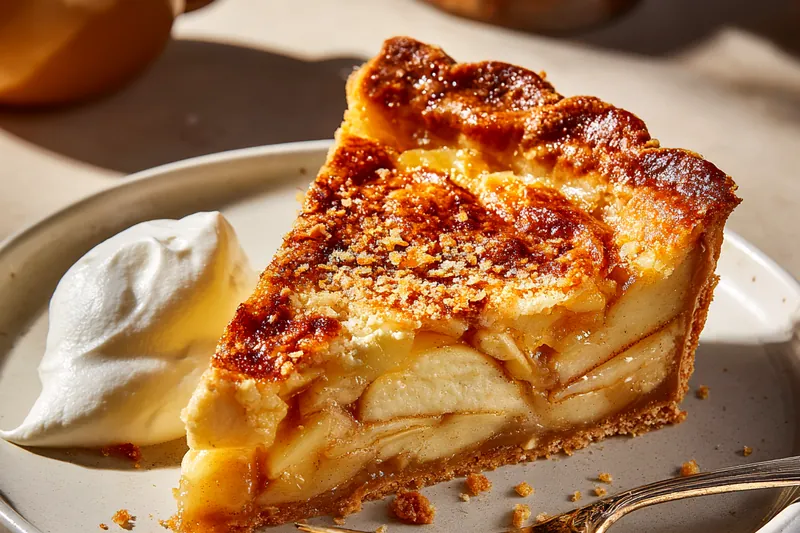
This French Apple Custard Pie combines the best of two classic desserts: the tender, spiced apples of a traditional apple pie with the silky, luxurious custard filling reminiscent of crème brûlée. The buttery, flaky crust serves as the perfect foundation for layers of thinly sliced apples bathed in a vanilla-scented custard, all topped with a satisfyingly crisp caramelized sugar crust. It's an elegant yet approachable dessert that's perfect for fall gatherings, holiday dinners, or any time you want to impress your guests with minimal effort.


The Perfect Marriage of Apple Pie and Custard
French Apple Custard Pie, known in France as 'tarte aux pommes à la crème' or 'flan aux pommes,' represents the beautiful intersection of rustic fruit tarts and elegant custard desserts. Unlike American apple pie with its double crust and chunky filling, this French version features thinly sliced apples suspended in a luscious vanilla custard, all nestled in a single buttery crust. The result is a dessert that's simultaneously comforting and sophisticated, with a texture that's creamy rather than jammy.
What truly sets this pie apart is the caramelized sugar topping, which adds a delightful textural contrast and a hint of bitter-sweet complexity that balances the rich custard. This technique, borrowed from crème brûlée, transforms the dessert from lovely to unforgettable. The custard itself is carefully formulated to set just enough to slice cleanly while remaining silky and tender, never rubbery or overly firm. The addition of a small amount of flour to the custard mixture helps achieve this perfect consistency while preventing the filling from becoming watery as the apples release their moisture during baking.
💡 Professional Tip
The key to a perfectly smooth custard is tempering your ingredients—make sure your cream and eggs are at room temperature before mixing, and whisk gently to avoid incorporating too many air bubbles, which can create an uneven texture during baking.
Frequently Asked Questions
Absolutely! This pie actually benefits from being made a few hours ahead, as the custard needs time to set properly. You can bake the pie completely up to 24 hours in advance, but wait to caramelize the sugar topping until 2-3 hours before serving for the crispest results. Store the baked, uncovered pie in the refrigerator, then bring it to room temperature for 30 minutes before adding the sugar and using your torch. The pie can also be frozen for up to 2 months before caramelizing—just thaw in the refrigerator overnight.
Yes! While Honeycrisp and Granny Smith apples work beautifully because they hold their shape and provide a nice balance of sweet and tart, you can use Braeburn, Jonagold, or even Golden Delicious apples. Avoid very soft apples like McIntosh or Red Delicious, as they'll turn mushy during baking. For best results, use a combination of two apple varieties to create depth of flavor—try mixing one tart variety with one sweet. Just make sure to slice them uniformly thin (about 1/8 inch) so they cook evenly.
No torch? No problem! You can achieve a beautifully caramelized top using your oven's broiler. After the pie has cooled for about 10 minutes, sprinkle the sugar evenly over the top and place the pie on the upper rack under a preheated broiler. Watch it very carefully—it will only take 2-3 minutes, and the sugar can go from perfect to burnt in seconds. Alternatively, you can skip the caramelized topping entirely and simply dust the finished pie with powdered sugar for a more traditional presentation.
Heavy cream gives this custard its signature luxurious texture and rich flavor, but you can make substitutions if needed. Half-and-half will work in a pinch, though the custard will be slightly less rich and creamy. You can also use a combination of whole milk and cream (3/4 cup milk plus 1/4 cup cream) for a lighter version. Avoid using skim or low-fat milk, as the custard needs the fat content to set properly and achieve the right consistency. For a dairy-free version, full-fat coconut cream works surprisingly well, though it will impart a subtle coconut flavor.
The custard is perfectly baked when the edges are set and lightly golden, but the center still has a slight jiggle when you gently shake the pan—think of a softly set panna cotta. It should not be liquidy, but it shouldn't be completely firm either, as it will continue to set as it cools. If you insert a knife about 2 inches from the edge, it should come out mostly clean with just a bit of custard clinging to it. The internal temperature should reach about 170-175°F. Over-baking will result in a rubbery, curdled custard, so it's better to err on the side of slightly underdone.
This pie is stunning on its own, but a few accompaniments can elevate it even further. A dollop of unsweetened whipped cream or crème fraîche provides a lovely tangy contrast to the sweet custard. Vanilla ice cream is always a crowd-pleaser, especially if you serve the pie slightly warm. For a more sophisticated presentation, try a small scoop of salted caramel ice cream or a drizzle of warm caramel sauce. A dusting of cinnamon or a few fresh apple slices can add visual appeal. Pair it with a cup of strong coffee, espresso, or a glass of sweet dessert wine like Sauternes for the full French experience.
Absolutely! Pears make an excellent substitution and create a slightly more delicate flavor profile. Use firm pears like Bosc or Anjou, and make sure they're ripe but not overly soft. You can also combine apples and pears for an interesting variation. If using pears, consider adding a tablespoon of brandy or pear liqueur to the custard mixture for extra depth. You might also want to add a pinch of cardamom or ginger along with the cinnamon for a warming spice note that complements pears beautifully.
Store any leftover pie covered loosely with plastic wrap or in an airtight container in the refrigerator for up to 4 days. The caramelized sugar topping will soften over time, but the pie will still be delicious. If you want to re-crisp the top, you can sprinkle a bit more sugar and torch it again, or place individual slices under the broiler for a minute. The pie is best enjoyed cold or at room temperature—let refrigerated slices sit out for 15-20 minutes before serving. Avoid leaving the pie at room temperature for more than 2 hours due to the custard filling, which is perishable.
Recipe Troubleshooting Guide
Soggy Bottom Crust
Problem: The bottom of your pie crust is soggy or undercooked while the top is perfectly done.
Solution: This happens when moisture from the apples and custard seeps into the crust. To prevent this, blind bake your crust for 10-12 minutes before adding the filling—line it with parchment paper and pie weights or dried beans, then bake until it's just starting to turn golden. You can also brush the raw crust with a thin layer of beaten egg white before adding the filling, which creates a moisture barrier. Make sure your oven is fully preheated, and place the pie on the lower third of the oven to ensure the bottom gets enough direct heat.
Custard Won't Set
Problem: Your custard remains liquidy or very soft even after the recommended baking time.
Solution: This usually means the custard needs more time in the oven or your oven temperature is running low. Continue baking in 5-minute increments, checking after each interval until the custard has a slight jiggle in the center only. Use an oven thermometer to verify your actual oven temperature—many ovens run 25°F cooler than their settings indicate. Also ensure you're using large eggs (not medium or extra-large) and that you've measured the cream accurately, as too much liquid will prevent proper setting. The custard will continue to firm up as it cools, so don't overbake trying to achieve a completely solid center.
Curdled or Grainy Custard
Problem: Your custard has a curdled appearance or grainy texture instead of being smooth and creamy.
Prevention: This occurs when the custard is baked at too high a temperature or for too long, causing the eggs to scramble. Always bake at 375°F, not higher, and watch carefully for the signs of doneness. Make sure to remove the pie when there's still a slight jiggle in the center. Using a water bath isn't practical for this type of pie, but you can place a baking sheet on the rack below to diffuse some of the bottom heat. If your custard has already curdled, unfortunately there's no way to fix it, but you can prevent it next time by setting a timer and checking early.
Apples Float to the Top
Problem: Your apple slices float above the custard instead of staying distributed throughout.
Recovery: This is actually somewhat normal and not a major problem—it creates a rustic look! However, if you want more evenly distributed apples, try slicing them thinner (about 1/16 inch instead of 1/8 inch) so they're less buoyant. You can also toss the apple slices with 1 tablespoon of the sugar and let them sit for 10 minutes before arranging them in the crust—this draws out some moisture and helps them settle. Arrange the apples in a tight, overlapping pattern and press them down gently before pouring the custard. Pour the custard slowly and carefully to avoid disturbing the apple arrangement.
Burnt Sugar Topping
Problem: The caramelized sugar top burns or becomes too dark and bitter.
Prevention: Sugar caramelization happens quickly and can go from perfect to burnt in seconds. When using a kitchen torch, keep it moving constantly in small circular motions, holding it about 4-6 inches from the surface. Don't focus on one spot for too long. If using the broiler, watch it like a hawk and don't walk away—set a timer for just 1 minute and check, then continue in 30-second intervals. Use superfine or caster sugar if available, as it melts more evenly than granulated. If your sugar does burn, you can carefully scrape off the burnt layer with a knife and try again with fresh sugar.
Flavor Balance Issues
Too Sweet: If your pie tastes too sweet, serve it with unsweetened whipped cream or crème fraîche to balance the sweetness. Next time, reduce the sugar in the custard by 2 tablespoons, or use a tartier apple variety like Granny Smith exclusively.
Too Salty: If you've accidentally added too much salt, there's no way to remove it, but you can mask it slightly by serving the pie with vanilla ice cream or sweetened whipped cream. For your next attempt, use just a small pinch (about 1/16 teaspoon) of salt—it should be barely detectable.
Bland: If your pie tastes flat or bland, it likely needs more vanilla, spices, or salt. The vanilla extract should be pure, not imitation, for the best flavor. You can add interest by increasing the cinnamon to 1/2 teaspoon and adding 1/4 teaspoon of ground ginger. A tiny pinch of salt in the custard makes all the other flavors pop. You can also brush the finished pie with warmed apricot jam for extra flavor and shine.
Selecting the Right Ingredients for Success
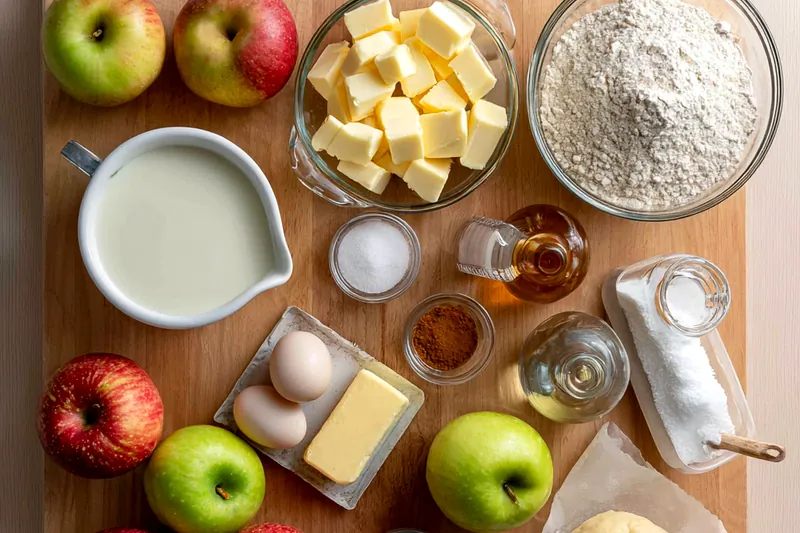
The beauty of this French Apple Custard Pie lies in its simplicity, which means each ingredient plays a crucial role in the final result. Starting with the apples, you want a variety that will hold its shape during baking while providing good flavor. Honeycrisp apples are my top choice because they're naturally sweet with a hint of tartness, have a firm, crisp texture that doesn't turn mushy, and their flavor intensifies when cooked. Granny Smith apples are the classic baker's apple for good reason—their tartness balances the sweet custard perfectly, and they maintain their structure even after extended baking. For the most complex flavor profile, use a combination of both varieties.
The custard base requires just a handful of ingredients, but quality matters tremendously. Use heavy cream with at least 36% butterfat—it creates that luxurious, silky texture that defines this dessert. Fresh, large eggs are essential; the yolks provide richness and color while the whites help the custard set properly. Pure vanilla extract, not imitation, makes a noticeable difference in the final flavor. The small amount of flour might seem unusual in a custard, but it acts as a stabilizer, helping the filling set without becoming rubbery and preventing the moisture from the apples from making the custard watery. For the crust, whether you're making homemade or using store-bought, look for an all-butter pastry dough—it provides the best flavor and flakiness that complements the creamy filling.
Essential Ingredient Notes
- Apples: Choose firm, crisp apples that hold their shape when cooked. Slice them uniformly thin (about 1/8 inch) using a sharp knife or mandoline for even cooking. Toss with a tiny squeeze of lemon juice if preparing in advance to prevent browning.
- Heavy Cream: Use heavy whipping cream with at least 36% butterfat for the richest custard. Bring it to room temperature before mixing to ensure smooth incorporation with the eggs and to prevent temperature shock when baking.
- Vanilla Extract: Pure vanilla extract is essential—imitation vanilla has a harsh, chemical aftertaste that's especially noticeable in delicate custards. For an extra-special touch, you can split half a vanilla bean and scrape the seeds into the custard mixture.
Mastering the Technique
The key to a perfect French Apple Custard Pie lies in understanding the delicate balance of textures and mastering the custard technique. Unlike a traditional baked custard that uses a water bath, this pie relies on a moderate oven temperature and careful timing to achieve a filling that's set but still creamy. When mixing your custard, whisk gently but thoroughly to combine all ingredients without incorporating too many air bubbles, which can create an uneven texture. The small amount of flour acts as insurance against overcooking, allowing a slightly wider window of doneness while still maintaining that signature silky texture.
Arranging the apples is more than just aesthetics—the way you layer them affects how the custard cooks around them. By arranging thin slices in overlapping concentric circles, you create channels for the custard to flow through, ensuring even distribution and preventing large air pockets. The caramelization technique borrowed from crème brûlée is what elevates this from a simple custard tart to something truly special. Whether using a torch or your broiler, the goal is to melt and caramelize the sugar quickly enough that it forms a crisp shell without heating the custard beneath too much. This creates that satisfying crack when you tap it with a spoon, followed by the contrast of the cool, creamy custard underneath—it's textural perfection.
The Perfect Custard Temperature
Custard is all about temperature control. Your eggs will begin to set around 160°F, but the magic happens between 170-175°F where the custard firms up while remaining creamy. Use an instant-read thermometer inserted about 2 inches from the edge to check—the center will be slightly cooler but will continue cooking from residual heat. Remember that custard continues to set as it cools, so what looks slightly underdone in the oven will be perfect once chilled.
French Apple Custard Pie: Ultimate Fall Treat
📋 Ingredients
Crust & Fruit
- 3 large eggsRoom temperature for smooth mixing
- 1 cup heavy creamAt least 36% butterfat for richness
- 1/2 cup granulated sugarFor the custard base
- 1 teaspoon pure vanilla extractPure, not imitation
- 1 tablespoon all-purpose flourHelps stabilize the custard
- 1/8 teaspoon ground nutmegFresh grated is best
- Pinch of saltEnhances all flavors
Custard Base
- 1 prepared 9-inch pie crustHomemade or quality store-bought, all-butter preferred
- 3 medium applesHoneycrisp or Granny Smith, peeled and thinly sliced
- 1/4 teaspoon ground cinnamonFor sprinkling on apples
- 2 tablespoons granulated sugarFor caramelizing the top
Instructions
Prepare the Crust and Apples
Preheat your oven to 375°F (190°C). Roll out the pie crust and fit it into a 9-inch tart pan with a removable bottom, trimming any excess. Prick the bottom with a fork. Arrange the thinly sliced apples in a circular, overlapping pattern in the crust. Sprinkle with cinnamon.
Make the Custard Mixture
In a medium mixing bowl, whisk together the eggs, heavy cream, 1/2 cup sugar, vanilla extract, flour, nutmeg, and salt until smooth and well combined. The mixture should be silky with no lumps.
Assemble and Bake
Carefully pour the custard mixture over the arranged apples in the crust, ensuring it fills all the gaps. Place the tart pan on a baking sheet to catch any drips. Bake for 45-50 minutes until the custard is set but still has a slight jiggle in the center.
Caramelize the Top
Remove the pie from the oven and let it cool for 10 minutes. Sprinkle the remaining 2 tablespoons of sugar evenly over the top. Use a kitchen torch to caramelize the sugar until golden brown and crispy, or place under the broiler for 2-3 minutes, watching carefully to prevent burning.
Cool and Serve
Allow the pie to cool to room temperature or chill in the refrigerator for at least 2 hours before serving. The custard will firm up as it cools. Carefully remove from the tart pan, slice, and serve with whipped cream or crème fraîche if desired.
Recipe Notes & Tips
Storage
Store covered in the refrigerator for up to 4 days. The caramelized sugar topping will soften over time but can be re-crisped with a kitchen torch or under the broiler. The pie can also be frozen (before caramelizing) for up to 2 months.
Serving Suggestions
Serve chilled or at room temperature with unsweetened whipped cream, crème fraîche, vanilla ice cream, or a drizzle of caramel sauce. Pairs beautifully with coffee, espresso, or sweet dessert wines like Sauternes or late-harvest Riesling.
Variations
Try using pears instead of apples, or a combination of both. Add 1 tablespoon of brandy or rum to the custard for depth. Experiment with spices like cardamom or ginger. For a chocolate twist, add 2 tablespoons of cocoa powder to the custard mixture.