Fall Harvest Pasta Salad with Butternut Squash and Cranberries
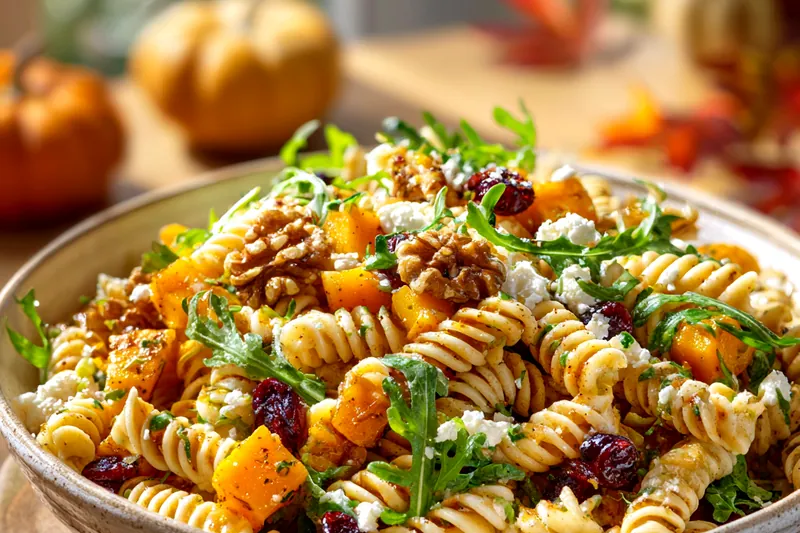
This Fall Harvest Pasta Salad is the ultimate autumn side dish that celebrates the season's best flavors. Roasted butternut squash brings natural sweetness, while dried cranberries add tart bursts of flavor, and creamy goat cheese provides rich tanginess. Tossed with a maple vinaigrette and topped with crunchy walnuts and peppery arugula, this colorful pasta salad is perfect for Thanksgiving dinner, potlucks, or any fall gathering.


Why This Fall Pasta Salad Works
The magic of this Fall Harvest Pasta Salad lies in its perfect balance of flavors and textures. Roasting the butternut squash at high heat caramelizes its natural sugars, creating a deeper, more complex sweetness that pairs beautifully with the tart cranberries. The goat cheese adds a creamy, tangy element that cuts through the richness, while the walnuts provide essential crunch. Unlike traditional pasta salads that can feel heavy, the addition of fresh arugula keeps this dish feeling light and vibrant, even with hearty fall ingredients.
The maple vinaigrette is the secret weapon that ties everything together. The combination of maple syrup, apple cider vinegar, and Dijon mustard creates a dressing that's simultaneously sweet, tangy, and slightly sharp—echoing all the flavors already present in the salad. This vinaigrette is emulsified to create a smooth, coating consistency that clings to every pasta spiral without pooling at the bottom of the bowl. The result is a pasta salad where every bite delivers the complete flavor profile, making it just as delicious on the last serving as it was on the first.
💡 Professional Tip
For the best flavor, toss the warm roasted squash and cooked pasta with the vinaigrette while they're still slightly warm—this helps the ingredients absorb the dressing better. Add the goat cheese and arugula at the very end to prevent them from completely melting or wilting, maintaining nice textural contrast.
Frequently Asked Questions
Yes! This pasta salad can be made up to 24 hours in advance. Prepare everything except the arugula and goat cheese, toss with the vinaigrette, and store covered in the refrigerator. About 30 minutes before serving, bring it to room temperature, then add the fresh arugula and goat cheese crumbles. The arugula will wilt too much if added too far in advance, and the goat cheese maintains better texture when added fresh.
Absolutely! Feta cheese is an excellent substitute and provides a similar tangy, crumbly texture. Blue cheese works beautifully if you enjoy stronger flavors. For a milder option, try cubed fresh mozzarella or small mozzarella pearls. If you need a dairy-free version, cashew cheese or a good quality vegan feta work well, though the flavor profile will be slightly different.
Sweet potato is the best substitute and actually works wonderfully in this recipe—cube it the same way and roast using the same method. Delicata squash is another excellent option and doesn't require peeling. Regular carrots can work in a pinch; just cut them into similar-sized pieces and extend the roasting time by 5-10 minutes. Each vegetable will bring a slightly different sweetness, but all complement the fall flavor profile.
Fresh cranberries would be too tart and hard for this salad. If you want to use fresh, you'd need to make a quick cranberry compote by simmering them with sugar and orange juice until they burst and soften, then cooling completely before adding. However, dried cranberries are really ideal here because they provide concentrated sweetness and chewiness that contrasts perfectly with the other textures.
The squash is perfectly roasted when you can easily pierce it with a fork and the edges are golden brown with some caramelization. The cubes should be tender but still hold their shape—not mushy or falling apart. Look for those slightly crispy, caramelized edges, which indicate the natural sugars have caramelized and will provide the best flavor. If the squash is browning too quickly but still feels hard, reduce oven temperature to 400°F and continue cooking.
This pasta salad pairs wonderfully with roasted turkey, baked ham, or grilled chicken for a complete meal. It's substantial enough to serve as a main course for lunch, especially with a side of crusty bread. For Thanksgiving, it complements traditional dishes like green bean casserole and stuffing beautifully. It's also excellent alongside grilled vegetables or a simple roasted chicken for a lighter autumn dinner.
This recipe is very flexible! Try adding diced apples (Honeycrisp or Granny Smith) for extra crunch and sweetness. Pomegranate arils make a beautiful, jewel-like addition. Pecans can replace walnuts if preferred. For extra protein, add grilled chicken, chickpeas, or white beans. Baby spinach can replace or supplement the arugula. Some people enjoy adding a handful of chopped red onion for extra bite, or dried cherries instead of cranberries.
Store leftovers in an airtight container in the refrigerator for up to 3 days. The arugula will wilt and the goat cheese will soften, but the salad will still be delicious. If you know you'll have leftovers, consider keeping some undressed salad and fresh greens separate, then mixing portions as needed. The pasta may absorb the dressing as it sits, so you might want to refresh leftovers with a small drizzle of olive oil and a splash of vinegar before serving.
Recipe Troubleshooting Guide
Squash Is Mushy or Overcooked
Problem: The butternut squash has turned to mush and lost its shape during roasting.
Solution: This usually happens from overcooking or cutting pieces too small. Make sure cubes are at least ½ inch in size—smaller pieces cook too quickly. Check the squash at 20 minutes rather than waiting the full 25. Also ensure your oven temperature is accurate; if it runs hot, reduce to 400°F. The squash should be tender but still hold its shape when pierced.
Salad Is Too Dry
Problem: The pasta salad seems dry and the dressing has been absorbed completely.
Solution: Pasta absorbs dressing as it sits, especially when cold. Always reserve about ¼ cup of extra vinaigrette to toss through before serving. You can also refresh the salad with 2-3 tablespoons of olive oil and a splash of apple cider vinegar. If making ahead, slightly underdress initially and add more dressing just before serving for the best consistency.
Vinaigrette Won't Emulsify
Problem: The vinaigrette is separating and won't stay blended.
Prevention: Make sure you're adding the oil very slowly while whisking constantly—this is key to emulsification. The Dijon mustard acts as an emulsifier, so ensure you're using enough. Try whisking the vinegar, maple syrup, mustard, and seasonings together first, then add oil in a thin, steady stream while whisking vigorously. Alternatively, use a blender or immersion blender, which makes emulsifying much easier and nearly foolproof.
Walnuts Taste Bitter
Problem: The walnuts have a bitter or stale taste.
Recovery: Old or improperly stored walnuts can develop rancid oils that taste bitter. Always taste walnuts before using—they should taste buttery and slightly sweet, not bitter or sharp. Buy fresh walnuts and store them in the freezer for best freshness. Toasting helps bring out their natural sweetness and reduces any bitterness, but it won't fix truly rancid nuts. If walnuts taste off, replace them with fresh ones or substitute pecans.
Goat Cheese Becomes Too Soft or Melty
Problem: The goat cheese has melted into the pasta and lost its distinct texture.
Prevention: Goat cheese should be added at the very end, after the pasta and squash have cooled to at least room temperature. If adding while ingredients are still warm, the cheese will melt completely. For best results, keep the goat cheese refrigerated until just before serving, then crumble it over the top and toss gently. Some melting is actually nice, but if you want it to stay completely intact, add it right before serving.
Flavor Balance Issues
Too Sweet: If the salad tastes too sweet, add more apple cider vinegar (start with 1 tablespoon) or a squeeze of fresh lemon juice. You can also increase the arugula, which adds peppery bitterness to balance sweetness.
Too Salty: If too salty, add more cooked pasta to dilute the salt, or balance with additional maple syrup and a handful more of unsalted ingredients like extra squash or cranberries. Adding unsalted walnuts can also help.
Bland: If the flavor seems flat, the dressing likely needs more seasoning. Add more salt, a pinch of black pepper, and another tablespoon of Dijon mustard. A squeeze of lemon juice or extra maple syrup can also brighten the overall flavor profile.

Ingredient Selection Guide
Choosing the right butternut squash is crucial for this recipe. Look for squash that feels heavy for its size with hard, matte skin free of soft spots or blemishes. The neck portion (the long, cylindrical part) is easiest to cube and has fewer seeds, so choose squash with longer necks if possible. For convenience, pre-cubed butternut squash from the produce section works perfectly well and saves significant prep time. Just ensure the cubes are relatively uniform in size—if they vary too much, separate them and add larger pieces to the oven first.
The quality of your dried cranberries and walnuts significantly impacts the final dish. Avoid dried cranberries that are rock-hard or have added colors; they should be slightly pliable and jewel-toned. Look for walnuts labeled as 'fresh crop' and avoid any with dark discoloration or a sharp smell, which indicates rancidity. For the goat cheese, choose a creamy, fresh log rather than pre-crumbled cheese when possible—it has better flavor and you can control the crumble size. If using crumbled goat cheese from a container, check that it's fresh and hasn't dried out.
Essential Ingredient Notes
- Butternut Squash: Choose squash with a long neck and firm, matte skin. For easier prep, buy pre-cubed squash. Cut pieces into uniform ½-inch cubes for even roasting. Don't overcrowd the pan—spread cubes in a single layer so they roast rather than steam.
- Goat Cheese: Use fresh, creamy goat cheese from a log rather than pre-crumbled for best flavor and texture. Let it come closer to room temperature for easier crumbling, but don't add it to the salad until just before serving to prevent complete melting.
- Maple Syrup: Use pure maple syrup, not pancake syrup or maple-flavored syrup. Grade A Dark Amber (previously Grade B) has the most robust maple flavor and works beautifully in savory applications. The maple flavor should be noticeable but not overwhelming.
Mastering the Technique
The key to perfect roasted butternut squash is high heat and proper spacing. Roasting at 425°F creates caramelization on the exterior while keeping the interior tender and creamy. Don't overcrowd your baking sheet—if the cubes are too close together, they'll steam instead of roast and won't develop those delicious golden-brown edges. Use two baking sheets if necessary. Flipping the squash halfway through ensures even browning on multiple sides and prevents burning on any one side.
The technique for assembling this salad matters just as much as the cooking. Toss the pasta with the vinaigrette while both are still slightly warm—this allows the pasta to absorb flavors better and creates a more cohesive dish. However, let things cool to room temperature before adding the goat cheese and arugula to prevent wilting and melting. The gentle tossing motion is important too; you want to distribute ingredients evenly without breaking up the squash or completely wilting the arugula. Think of it as folding rather than stirring vigorously.
Perfect Vinaigrette Emulsification
A properly emulsified vinaigrette coats every ingredient evenly instead of pooling at the bottom. Start by whisking together all ingredients except the oil until smooth. Then, add the olive oil in a very thin, steady stream while whisking constantly in a circular motion. The key is patience—adding oil too quickly will break the emulsion. The mixture should transform from separated liquids to a creamy, cohesive dressing. If it breaks, start with a fresh tablespoon of Dijon in a clean bowl and slowly whisk in the broken vinaigrette to re-emulsify.
Fall Harvest Pasta Salad with Butternut Squash and Cranberries
📋 Ingredients
For the Salad
- ¼ cup apple cider vinegarProvides the tangy backbone of the dressing
- 3 tablespoons pure maple syrupUse Grade A Dark Amber for the richest flavor
- 2 tablespoons Dijon mustardActs as an emulsifier and adds depth
- 2 cloves garlic, mincedFresh garlic is best; avoid jarred for optimal flavor
- ⅓ cup extra virgin olive oilUse a good quality, fruity olive oil
- ½ teaspoon saltAdjust to taste after mixing
- ¼ teaspoon black pepperFreshly ground works best
For the Maple Vinaigrette
- 12 oz rotini pastaThe spirals catch and hold the dressing perfectly
- 3 cups butternut squash, cubedAbout 1 small squash; cut into ½-inch cubes
- 2 tablespoons olive oil for roastingHelps achieve golden, caramelized edges
- 1 cup dried cranberriesChoose plump, pliable cranberries, not rock-hard ones
- 4 oz goat cheese, crumbledFresh log goat cheese works best; feta is a good substitute
- 1 cup walnuts, toasted and choppedToast for maximum flavor and crunch
- 3 cups fresh arugulaBaby arugula is more tender; regular arugula adds more peppery bite
- ¼ cup fresh parsley, choppedFor garnish and a fresh, herbal note
- ½ teaspoon salt for roastingSeasons the squash while roasting
- ¼ teaspoon black pepper for roastingEnhances the natural sweetness of the squash
Instructions
Roast the Butternut Squash
Preheat your oven to 425°F (220°C). Toss the cubed butternut squash with 2 tablespoons olive oil, ½ teaspoon salt, and ¼ teaspoon black pepper until evenly coated. Spread the squash in a single layer on a large baking sheet, making sure the pieces aren't touching or overcrowded. Roast for 20-25 minutes, flipping the cubes halfway through cooking, until the squash is fork-tender and the edges are golden brown with visible caramelization.
Cook the Pasta
While the butternut squash is roasting, bring a large pot of generously salted water to a rolling boil. Add the rotini pasta and cook according to package directions until al dente, typically 8-10 minutes. Drain the pasta well and rinse briefly with cool water to stop the cooking process. Transfer the drained pasta to a large mixing bowl and set aside.
Make the Maple Vinaigrette
In a small bowl or mason jar, whisk together the apple cider vinegar, maple syrup, Dijon mustard, minced garlic, remaining ½ teaspoon salt, and ¼ teaspoon black pepper until well combined. While whisking constantly, slowly drizzle in the ⅓ cup olive oil in a thin, steady stream until the dressing is fully emulsified and has a creamy consistency. Taste and adjust seasoning if needed.
Toast the Walnuts
Place the walnuts in a dry skillet over medium heat. Toast for 3-5 minutes, stirring or shaking the pan frequently to prevent burning, until the walnuts are fragrant and lightly golden. Remove from heat immediately and transfer to a plate to cool. Once cool enough to handle, roughly chop the walnuts into bite-sized pieces.
Assemble the Salad
Add the roasted butternut squash (still slightly warm is fine), dried cranberries, and chopped toasted walnuts to the bowl with the pasta. Pour the maple vinaigrette over the mixture and toss gently but thoroughly to coat all ingredients evenly with dressing. Allow to cool to room temperature, about 10 minutes, then add the fresh arugula and crumbled goat cheese. Toss gently to distribute the greens and cheese without completely wilting the arugula or melting the cheese.
Finish and Serve
Transfer the salad to a serving bowl and garnish with freshly chopped parsley and additional crumbled goat cheese or walnut halves if desired. The salad can be served immediately while slightly warm, at room temperature for the best flavor balance, or chilled. If serving chilled, refrigerate for at least 30 minutes. Before serving, give it a gentle toss and check if it needs a small drizzle of additional dressing, as the pasta may absorb some as it sits.
Recipe Notes & Tips
Storage
Store leftover pasta salad in an airtight container in the refrigerator for up to 3 days. The arugula will wilt over time, so if you anticipate leftovers, consider keeping some undressed salad and fresh greens separate. The pasta will absorb dressing as it sits, so refresh leftovers with a drizzle of olive oil and splash of vinegar before serving. This salad does not freeze well due to the cheese and vegetables.
Serving Suggestions
This pasta salad is perfect for Thanksgiving dinner, potlucks, or autumn gatherings. Serve it as a substantial side dish alongside roasted turkey, ham, or chicken. It's also delicious as a main course for lunch, especially with crusty bread. For a complete fall feast, pair with green bean casserole, roasted Brussels sprouts, or a simple green salad. The salad can be served warm, at room temperature, or chilled depending on preference.
Variations
Make this recipe your own! Substitute sweet potato or delicata squash for butternut. Swap pecans for walnuts, or try candied nuts for extra sweetness. Add diced Honeycrisp apples or pomegranate arils for freshness. Use feta or blue cheese instead of goat cheese. Replace arugula with baby spinach for a milder flavor. For added protein, toss in grilled chicken, chickpeas, or white beans. Dried cherries work well in place of cranberries.