Cranberry Orange Glazed Turkey Breast
This Cranberry Orange Glazed Turkey Breast transforms a simple protein into an absolutely stunning centerpiece that tastes even better than it looks. The sweet-tart glaze caramelizes beautifully during roasting, creating layers of flavor that complement the tender, juicy turkey perfectly. Whether you're hosting Thanksgiving, Christmas dinner, or just want to elevate a weeknight meal, this recipe delivers restaurant-quality results with surprisingly little effort.

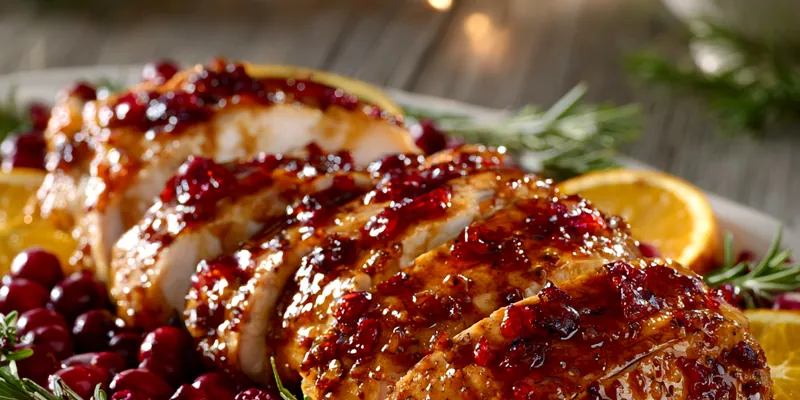
Why This Turkey Breast Recipe Works
The secret to perfectly moist turkey breast lies in three critical factors: proper seasoning, consistent basting, and not overcooking. By starting with a dry surface (patting with paper towels), we ensure the seasonings adhere properly and the skin can achieve a beautiful golden color. The olive oil creates a barrier that locks in moisture while allowing the exterior to develop flavor. Most importantly, we're cooking to an exact internal temperature of 165°F - not a minute longer - which prevents the dreaded dry turkey syndrome that ruins so many holiday meals.
The cranberry-orange glaze serves multiple purposes beyond just adding flavor. As it caramelizes on the turkey during roasting, it creates a protective layer that keeps moisture sealed inside the meat. The acidity from the orange juice and balsamic vinegar helps tenderize the protein fibers, while the sugars create that gorgeous glossy finish. Each basting session adds another layer of flavor complexity, building up that restaurant-quality glaze that makes this dish truly special. The combination of sweet honey, tart cranberries, and bright citrus creates a perfectly balanced flavor profile that complements rather than overwhelms the turkey.
💡 Professional Tip
Always let your turkey breast come to room temperature for 30 minutes before roasting - this ensures even cooking throughout. Cold meat from the refrigerator will cook unevenly, leaving you with overcooked edges and an undercooked center.
Frequently Asked Questions
You can prepare the glaze up to 3 days in advance and store it in an airtight container in the refrigerator. The turkey is best roasted fresh, but you can season it the night before and refrigerate it covered. If you need to serve this at a specific time, roast the turkey, let it rest, then slice and arrange on a platter. Cover with foil and keep warm in a 200°F oven for up to 45 minutes, basting with warm glaze just before serving.
Absolutely! Frozen cranberries work perfectly in this recipe and are often more affordable. No need to thaw them - just add them frozen directly to the saucepan. They may take an extra 2-3 minutes to break down, but the final result will be identical. In fact, frozen cranberries are picked at peak ripeness and flash-frozen, so they can actually have better flavor than out-of-season fresh berries.
While a meat thermometer is highly recommended for perfect results, you can test doneness by piercing the thickest part of the breast with a knife - the juices should run completely clear with no pink tinge. The meat should feel firm but not hard when pressed, and should have shrunk slightly from its raw size. However, investing in an instant-read thermometer (they're under $15) will transform your cooking and prevent both undercooking and overcooking.
Yes, maple syrup makes an excellent substitute and adds a lovely depth of flavor. Agave nectar also works well. If you want to reduce sugar, you can use 1/4 cup honey plus 1/4 cup orange juice, though the glaze won't be quite as thick. Avoid artificial sweeteners as they don't caramelize properly and can leave a bitter aftertaste when heated.
The turkey is done when an instant-read thermometer inserted into the thickest part of the breast (avoiding any bones) reads exactly 165°F. The meat should have shrunk slightly from its raw state, and the exterior should be golden brown with a glossy glaze. When you slice into it after resting, the juices should run clear, and the meat should be uniformly white throughout with no pink or translucent areas. Remember that the temperature will rise another 5 degrees during resting, so remove it from the oven right at 165°F.
This turkey pairs beautifully with classic holiday sides like garlic mashed potatoes, roasted Brussels sprouts, green bean casserole, or wild rice pilaf. The sweet-tart glaze also complements roasted root vegetables like carrots, parsnips, and sweet potatoes. For a lighter option, serve it over mixed greens with the glaze as a warm dressing. Don't forget crusty bread to soak up any extra glaze - it's too delicious to waste!
Yes, but you'll need to adjust the cooking time. A bone-in turkey breast of similar weight will take about 90-105 minutes total cooking time. The bone acts as an insulator, slowing down the cooking process. Place the thermometer in the thickest part of the breast without touching the bone for accurate reading. The bone will also add extra flavor to the meat, and you can use it to make turkey stock afterward.
Store leftover turkey and glaze separately in airtight containers in the refrigerator for up to 4 days. To reheat, slice the turkey if you haven't already, place in a baking dish, drizzle with some glaze or chicken broth to prevent drying, cover with foil, and warm in a 325°F oven for 15-20 minutes. You can also reheat individual portions in the microwave on 50% power for 2-3 minutes. The turkey also makes incredible sandwiches, salads, and can be frozen for up to 3 months.
Recipe Troubleshooting Guide
Glaze Too Thin
Problem: The cranberry-orange glaze remains watery and won't stick to the turkey properly even after simmering.
Solution: Continue simmering the glaze uncovered for an additional 5-10 minutes to evaporate more liquid. You can also add a cornstarch slurry (1 tablespoon cornstarch mixed with 2 tablespoons cold water) and simmer for 2 minutes until thickened. Remember that the glaze will thicken significantly as it cools, so it should have a slightly syrupy consistency when hot.
Turkey Drying Out
Problem: The turkey breast is turning out dry despite following the recipe timing.
Solution: Your oven may be running hot. Use an oven thermometer to verify the actual temperature. Always remove the turkey when it reaches exactly 165°F internal temperature - even 5-10 degrees over can make it dry. Increase basting frequency to every 10 minutes during the last 30 minutes. Make sure you're letting the turkey rest for the full 10-15 minutes before slicing, as this allows juices to redistribute throughout the meat.
Glaze Burning
Problem: The glaze is turning dark or burning on the turkey before the meat is fully cooked.
Prevention: The oven temperature is too high or you're applying the glaze too early. Tent the turkey loosely with aluminum foil after the first glazing to prevent over-browning while allowing it to continue cooking. You can also reduce oven temperature to 350°F and extend cooking time by 10-15 minutes. Start glazing after the first 30 minutes of cooking rather than from the beginning.
Uneven Cooking
Problem: One end of the turkey breast is overcooked while the other end is undercooked.
Recovery: This usually happens with tapered turkey breasts where one end is much thicker than the other. Tuck the thinner end under itself and secure with kitchen twine to create a more uniform thickness. Rotate the pan 180 degrees halfway through cooking. If one end is browning too quickly, shield it with a small piece of foil while allowing the thicker part to continue cooking.
Glaze Not Glossy
Problem: The finished glaze looks dull rather than having that beautiful glossy sheen.
Prevention: The glaze needs more sugar content or hasn't caramelized properly. After the turkey is done, brush on a final coat of glaze and place under the broiler for 2-3 minutes, watching constantly to prevent burning. Make sure your glaze contains enough honey and brown sugar - these are what create that gorgeous shine. You can also add 1 tablespoon of butter to the glaze right before the final basting for extra sheen.
Flavor Balance Issues
Too Sweet: If the glaze is too sweet, add 1-2 tablespoons more balsamic vinegar or fresh lemon juice to increase acidity. You can also add a pinch of salt to balance the sweetness.
Too Salty: If the turkey is too salty, it was likely over-seasoned initially or reduced too much. Dilute the glaze with additional orange juice and honey. Serve with unsalted sides to balance the overall meal.
Bland: If the flavor is flat, the glaze needs more depth. Add an extra tablespoon of Dijon mustard, a splash more balsamic vinegar, or a pinch of cayenne pepper. Fresh orange zest added at the end brightens everything up immediately.
Choosing the Right Ingredients
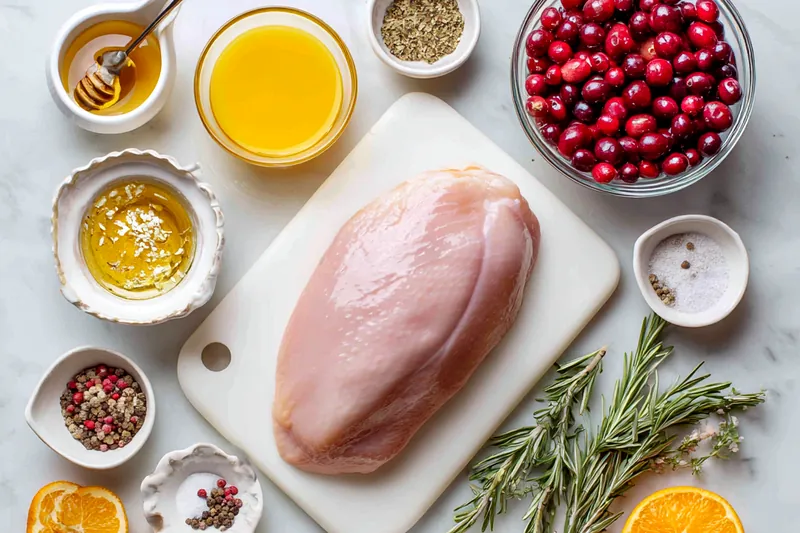
The quality of your ingredients directly impacts the final result, especially with a simple recipe like this where each component shines. Look for a boneless turkey breast that's plump and has an even color throughout with no gray spots. Fresh cranberries should be firm and bright red - avoid any that are soft, shriveled, or have brown spots. They're typically in season from late September through December, so stock up and freeze extras for year-round use. For the orange juice, fresh-squeezed makes a noticeable difference in brightness and flavor compared to store-bought, though a high-quality not-from-concentrate juice works well if you're short on time.
When selecting honey, choose a mild variety like clover or orange blossom that won't overpower the other flavors - dark, strong honeys can make the glaze taste bitter. The balsamic vinegar should be a decent quality (not the $2 bottle) but doesn't need to be aged 25 years - a mid-range option around $8-12 provides the right balance of sweetness and acidity. Fresh garlic is essential here; pre-minced jarred garlic has a sharp, almost metallic taste that will come through in the glaze. Finally, use fresh rosemary if at all possible - the dried version doesn't infuse the glaze with the same aromatic quality and can taste dusty.
Essential Ingredient Notes
- Turkey Breast: Choose a boneless turkey breast between 3-4 pounds for best results. Look for one with some fat marbling visible and an even thickness. If one end is much thinner, tuck it under and tie with kitchen twine. Natural or organic turkey has better flavor and texture. Avoid pre-brined or enhanced turkey as they're already injected with solution and can become too salty with our seasoning.
- Fresh Cranberries: Fresh cranberries should be firm, plump, and bounce when dropped. Avoid packages with moisture inside or berries that look shriveled. They freeze beautifully for up to one year - just spread on a baking sheet, freeze, then transfer to a freezer bag. You can use frozen cranberries directly in the glaze without thawing. Cranberries are at their peak in November and December.
- Orange Components: Use fresh orange juice and zest for maximum flavor impact. Naval oranges work beautifully for both. When zesting, only remove the bright orange outer layer and avoid the white pith underneath which is bitter. One large orange typically yields about 1/2 cup juice and 1 tablespoon zest. Room temperature oranges are easier to juice - roll them firmly on the counter before cutting to break down the membranes.
Mastering the Technique
The key to juicy turkey breast is understanding that poultry continues cooking after you remove it from the oven due to carryover heat. This is why we target exactly 165°F and immediately tent with foil to rest - the temperature will rise another 5 degrees during the resting period. Rushing this step by slicing too early causes all those precious juices to run out onto the cutting board instead of staying in the meat where they belong. Professional chefs know that proper resting is just as important as proper cooking. Using a roasting rack elevates the turkey, allowing hot air to circulate underneath for even cooking and preventing the bottom from becoming soggy.
The basting technique creates those beautiful layers of flavor and that glossy, caramelized exterior that makes this dish so visually stunning. Each time you brush on more glaze, you're building flavor complexity and adding another protective layer of moisture. Work quickly when basting - open the oven, brush generously, and close it within 30 seconds to maintain consistent oven temperature. Use a silicone basting brush rather than a traditional bristle brush as it's easier to clean and won't trap bacteria. Angle your slicing knife slightly and cut against the grain in smooth, confident strokes for beautiful presentation slices that stay intact.
The Perfect Glaze Consistency
The ideal glaze should coat the back of a spoon and slowly drip off in a steady stream - not too thick (like ketchup) and not too thin (like water). When you draw your finger through the glaze on the spoon, it should leave a clear trail that holds for a few seconds. This consistency allows the glaze to adhere to the turkey during basting while still being fluid enough to drizzle beautifully over the sliced meat for serving. If you're unsure, err on the slightly thicker side - you can always thin it with a splash of orange juice.
Cranberry Orange Glazed Turkey Breast
📋 Ingredients
For the Turkey
- 2 cups fresh cranberriesFirm, bright red berries work best; frozen work too without thawing
- 1 cup fresh orange juiceFresh-squeezed preferred for brightest flavor
- 1/2 cup honeyUse mild honey like clover or orange blossom
- 1/4 cup brown sugarLight or dark brown sugar both work perfectly
- 2 tablespoons balsamic vinegarMid-range quality vinegar is ideal
- 2 tablespoons Dijon mustardAdds depth and helps emulsify the glaze
- 3 cloves garlic, mincedFresh garlic only - jarred won't provide the same flavor
- 1 tablespoon orange zestZest only the orange outer layer, not the white pith
- 2 sprigs fresh rosemaryRemove before serving; infuses wonderful aroma
- 1/4 teaspoon ground cinnamonSubtle warmth that complements the cranberries
For the Cranberry-Orange Glaze
- 1 boneless turkey breast (3-4 pounds)Look for even thickness; natural or organic preferred
- 2 tablespoons olive oilExtra virgin olive oil for best flavor
- 1 teaspoon saltKosher or sea salt recommended for even distribution
- 1/2 teaspoon black pepperFreshly ground black pepper has more flavor
- 1 teaspoon garlic powderNot garlic salt - adds savory depth to the turkey
Instructions
Prepare the Turkey
Preheat your oven to 375°F (190°C). Remove the turkey breast from refrigeration 30 minutes before cooking to bring to room temperature. Pat the turkey completely dry with paper towels - this is crucial for proper seasoning adhesion and browning. Rub the entire surface with olive oil, then season generously and evenly with salt, black pepper, and garlic powder, making sure to coat all sides. Place the turkey breast on a rack set inside a roasting pan to allow air circulation underneath.
Make the Cranberry-Orange Glaze
While the turkey comes to temperature, make the glaze. In a medium saucepan over medium heat, combine the cranberries, orange juice, honey, brown sugar, balsamic vinegar, Dijon mustard, minced garlic, orange zest, rosemary sprigs, and cinnamon. Stir to combine and bring the mixture to a boil. Once boiling, reduce the heat to medium-low and let it simmer uncovered for 12-15 minutes, stirring occasionally, until the cranberries burst and the sauce thickens to a syrupy consistency. Remove and discard the rosemary sprigs. Set aside half of the glaze in a separate bowl for serving later.
Roast and Glaze the Turkey
Place the turkey in the preheated oven and roast for 30 minutes untouched. After 30 minutes, remove from oven and brush the entire surface generously with the cranberry-orange glaze using a silicone basting brush. Return to oven and continue roasting, basting with glaze every 15 minutes, for an additional 40-45 minutes. The turkey is done when an instant-read thermometer inserted into the thickest part reads exactly 165°F. The total cooking time will be approximately 70-75 minutes, but always rely on temperature rather than time.
Rest and Serve
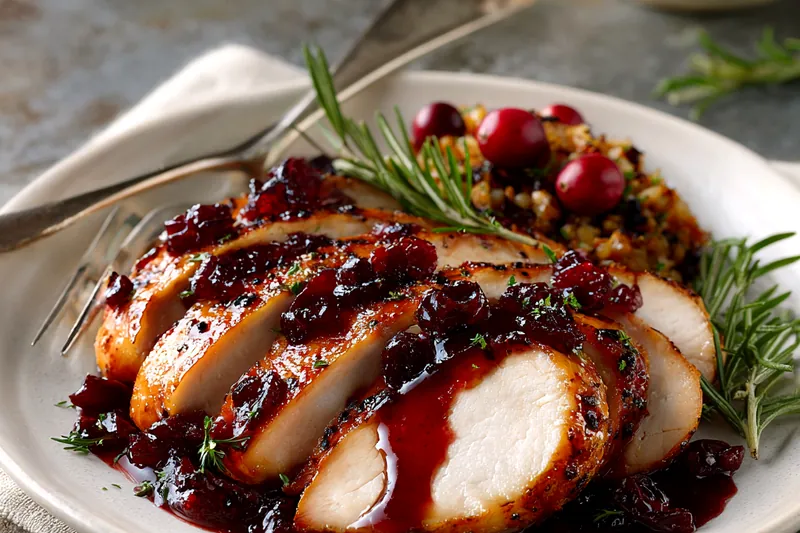
Remove the turkey from the oven when it reaches 165°F and immediately tent it loosely with aluminum foil. Let it rest undisturbed for 10-15 minutes - this allows the juices to redistribute throughout the meat for maximum moisture. While the turkey rests, gently rewarm the reserved glaze over low heat. Transfer the turkey to a cutting board and slice against the grain into 1/2-inch thick slices using a sharp carving knife. Arrange the slices on a serving platter, drizzle with the reserved warm glaze, and garnish with fresh cranberries, orange slices, and rosemary sprigs for a stunning presentation.
Recipe Notes & Tips
Storage
Store leftover turkey and glaze separately in airtight containers in the refrigerator for up to 4 days. The turkey can be frozen for up to 3 months - wrap tightly in plastic wrap, then aluminum foil, and label with the date. Thaw overnight in the refrigerator before reheating. The glaze can be refrigerated for up to 1 week or frozen for 3 months in a freezer-safe container.
Serving Suggestions
This turkey is stunning served on a large platter garnished with fresh orange slices, cranberries, and rosemary. Pair it with classic holiday sides like mashed potatoes, roasted vegetables, or wild rice pilaf. The leftover turkey makes incredible sandwiches on crusty bread with cream cheese and arugula, or can be added to salads for an elegant lunch. Serve extra glaze on the side for those who want more of that delicious sauce.
Variations
For a spicier version, add 1/4 teaspoon cayenne pepper to the glaze. You can substitute maple syrup for the honey for a different flavor profile. If cranberries aren't available, try dried cranberries rehydrated in the orange juice, or substitute with fresh or frozen raspberries. For a more savory version, reduce the honey to 1/4 cup and add 2 tablespoons soy sauce to the glaze.