Buttery Pecan Snowball Cookies
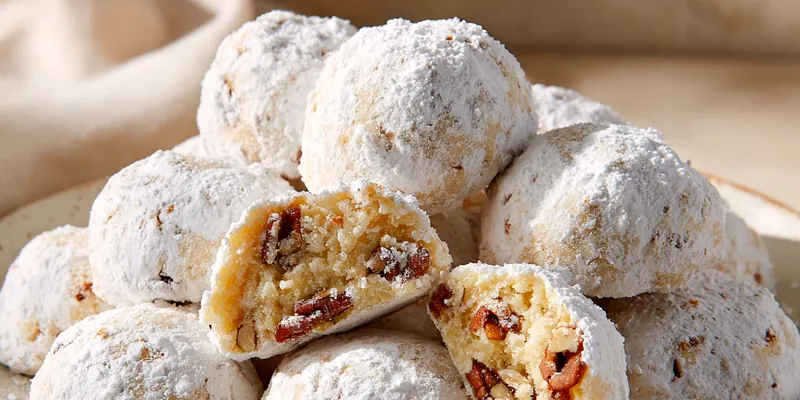
These Buttery Pecan Snowball Cookies are the epitome of holiday baking perfection. With their tender, melt-in-your-mouth texture and generous coating of powdered sugar, they're irresistible treats that disappear from cookie platters in minutes. The toasted pecans add a rich, nutty flavor that perfectly complements the sweet, buttery base.

The Secret to Perfect Snowball Cookies
The magic of snowball cookies lies in their delicate, crumbly texture that literally melts on your tongue. This texture comes from the high ratio of butter to flour and the absence of eggs, which would make them cake-like instead of tender and short. The key is using softened (not melted) butter and not overmixing the dough once you add the flour. Overmixing develops gluten, which creates a tougher cookie—exactly what we don't want here.
Toasting the pecans before adding them to the dough is a non-negotiable step that elevates these cookies from good to exceptional. The toasting process intensifies the pecans' natural oils and brings out their deep, nutty flavor. Just five minutes in a 350°F oven transforms them completely. Watch them carefully though—there's a fine line between perfectly toasted and burnt. You'll know they're ready when your kitchen smells amazing and they've deepened slightly in color.
💡 Professional Tip
Roll the cookies in powdered sugar twice—once while they're still slightly warm (this helps the first coat adhere), and again after they've cooled completely. This double-coating creates that signature thick, snowy appearance that makes snowball cookies so visually appealing.
Frequently Asked Questions
Absolutely! The unbaked dough can be shaped into balls and frozen for up to 3 months. Place them on a baking sheet to freeze individually, then transfer to a freezer bag. Bake directly from frozen, adding 2-3 extra minutes to the baking time. Baked cookies store beautifully in an airtight container for up to 2 weeks, or freeze for up to 3 months. Just be sure to re-roll them in fresh powdered sugar before serving if they've been stored for a while.
Yes! Walnuts are a popular substitute and work beautifully—they have a slightly more robust flavor than pecans. Almonds are another excellent option, though they have a different texture and more delicate flavor. Hazelnuts also work wonderfully and add a unique taste. Whatever nut you choose, make sure to toast it first and chop it finely so the cookies hold together properly.
If your cookies are spreading, your butter was likely too soft or even melted. The butter should be softened to room temperature but still hold its shape—not greasy or shiny. Also, make sure you're measuring your flour correctly by spooning it into the measuring cup and leveling it off, rather than scooping directly from the bag (which packs it down and gives you less flour than needed). Finally, chilling the shaped dough balls for 15-30 minutes before baking can help them hold their shape better.
Unsalted butter is preferred because it allows you to control the salt content in your cookies. Different brands of salted butter contain varying amounts of salt, which can make your cookies too salty. If you only have salted butter, you can use it, but reduce or omit the added salt in the recipe. The cookies may taste slightly saltier, but they'll still be delicious.
These cookies should remain very pale on top—they're done when the bottoms are just lightly golden and the edges are barely set. They'll look underdone, but that's exactly what you want! They continue to cook slightly as they cool on the baking sheet. If you wait until they look fully baked, they'll be overdone and dry. Check them at 12 minutes, and remember that different ovens vary, so you may need 12-14 minutes depending on your oven.
These cookies are perfect alongside coffee, tea, or hot chocolate. They're traditional holiday treats, so they pair wonderfully with eggnog, spiced cider, or mulled wine. For a dessert platter, serve them with other holiday favorites like gingerbread cookies, peppermint bark, or fudge. They also make a lovely accompaniment to vanilla ice cream or fresh berries for a lighter dessert option.
Yes! Replace the all-purpose flour with a 1-to-1 gluten-free baking flour blend. Make sure your blend contains xanthan gum or add 1/4 teaspoon to the recipe. The texture will be slightly more delicate, so handle the dough gently. Some people find that adding an extra 2 tablespoons of chopped pecans helps improve the structure. The cookies may also be a bit more crumbly, but the flavor will still be excellent.
Store cooled cookies in an airtight container at room temperature for up to 2 weeks. Place parchment paper between layers to prevent them from sticking together. Don't refrigerate them—the moisture in the refrigerator will make them soggy and dissolve the powdered sugar coating. For longer storage, freeze them in a freezer-safe container for up to 3 months. Thaw at room temperature and dust with fresh powdered sugar before serving.
Recipe Troubleshooting Guide
Cookies Are Too Crumbly
Problem: Cookies fall apart when you try to pick them up or bite into them.
Solution: This usually means the dough is too dry. Make sure you're measuring flour correctly—spoon it into the cup rather than scooping. If your dough seems dry and won't hold together, add butter 1 tablespoon at a time until it comes together. Also, ensure you're not over-chopping your nuts into dust; they should be finely chopped but still have small pieces visible.
Cookies Are Too Hard
Problem: Cookies have a tough, crunchy texture instead of being tender and delicate.
Solution: Overbaking is the most common culprit. These cookies should barely color on the bottom and remain completely pale on top. Reduce your baking time by 1-2 minutes. Also check that you haven't overmixed the dough after adding flour, which develops gluten and creates a tougher texture. Mix just until combined.
Powdered Sugar Disappears
Problem: The powdered sugar coating gets absorbed or disappears after storing.
Prevention: This is normal! The warmth and moisture from the cookies cause the first layer of powdered sugar to be absorbed. This is why you roll them twice—once warm and once cool. Before serving stored cookies, simply roll them in fresh powdered sugar or dust them generously with a sifter for a fresh snowy appearance.
Cookies Are Too Flat
Problem: Cookies spread out into discs instead of staying round and domed.
Recovery: Your butter was likely too warm. It should be softened but not melty or greasy. If your kitchen is very warm, chill the shaped dough balls for 15-30 minutes before baking. Also ensure you're using enough flour—measure by spooning into the cup and leveling off. Finally, don't press the dough balls down when placing them on the baking sheet; they'll flatten naturally as they bake.
Uneven Baking
Problem: Some cookies are done while others are still raw, or one side of the pan is more browned.
Prevention: Make sure all your dough balls are the same size—use a cookie scoop for consistency. Rotate your baking sheet 180 degrees halfway through baking to ensure even heat distribution. If your oven has hot spots, consider using an oven thermometer to check if it's heating accurately. Bake only one sheet at a time on the center rack for the most even results.
Flavor Balance Issues
Too Sweet: If cookies taste too sweet, reduce the initial powdered sugar to 1/3 cup and use less when rolling, or add a pinch more salt to balance the sweetness.
Too Salty: If too salty, you likely used salted butter. Next time use unsalted butter and control the salt separately. You can't fix already-baked cookies, but you can balance the saltiness by serving them with sweet beverages.
Bland: If flavor seems flat, increase vanilla to 1 1/2 teaspoons, or add 1/4 teaspoon almond extract. Make sure your pecans were properly toasted—this is where much of the flavor comes from. A tiny pinch of cinnamon or nutmeg can also enhance the flavor.

Choosing the Right Ingredients
The quality of your butter makes a tremendous difference in these cookies since it's the star ingredient. Use real unsalted butter—never margarine or butter substitutes, which contain water and will alter the texture. European-style butter with higher fat content (82-84% instead of 80%) creates an even more luxurious, melt-in-your-mouth texture, though regular butter works beautifully too. The butter should be softened to room temperature, which means it should give slightly when pressed but still hold its shape.
Fresh, high-quality pecans are essential. Old or rancid pecans will ruin these cookies, so taste one before using them—it should be sweet and buttery, not bitter. Store pecans in the freezer to keep them fresh longer. When chopping, aim for pieces about the size of a grain of rice. Too large and the cookies won't hold together; too fine and you'll lose the pleasant textural contrast. And please, don't skip the toasting step—it's what transforms these from good cookies to absolutely irresistible ones.
Essential Ingredient Notes
- Pecans: Always toast pecans before adding to the dough to intensify their flavor. Spread on a baking sheet and toast at 350°F for 5-7 minutes until fragrant. Let cool completely before chopping finely—about the size of rice grains. Store pecans in the freezer to keep them fresh.
- Butter: Use real unsalted butter at room temperature—it should be soft enough to indent with your finger but still hold its shape. Don't use the microwave to soften butter; it creates uneven melting. Let it sit at room temperature for 45-60 minutes instead. Quality matters here since butter is the primary flavor.
- Powdered Sugar: You'll need powdered sugar for both the dough and coating. Sift the sugar before rolling if it's lumpy to ensure an even, smooth coating. The double-rolling technique (once warm, once cool) creates that signature thick white coating. Buy extra—you'll use more than you think!

Mastering the Technique
The mixing method is crucial for achieving the perfect texture. Cream the butter and powdered sugar thoroughly—this incorporates air and creates a lighter cookie. However, once you add the flour, mix only until just combined. Overmixing at this stage develops gluten, which makes cookies tough instead of tender. The dough should come together but still be slightly crumbly. When you fold in the pecans, do so gently by hand to avoid overworking the dough.
Shaping the cookies uniformly ensures even baking. Use a small cookie scoop or measuring spoon to portion the dough—about 1 tablespoon per cookie. Roll each portion between your palms to create a smooth ball. If the dough is too soft to handle, chill it for 15 minutes. The cookies need space on the baking sheet as they spread slightly. Watch them carefully near the end of baking time—you want barely golden bottoms and completely pale tops. Resist the urge to overbake, as they'll firm up as they cool.
The Double-Sugar Roll Technique
Rolling the cookies in powdered sugar twice is the secret to that thick, snowy coating. First, roll them while still warm (after 5 minutes of cooling)—the residual heat helps the sugar adhere and partially melt into the cookie surface. Then, once completely cool, roll them again in fresh powdered sugar. This second coating stays powdery and white. Place 2 cups of powdered sugar in a shallow bowl and work in batches, rolling 3-4 cookies at a time and using a fork to help coat all sides evenly.
Buttery Pecan Snowball Cookies
📋 Ingredients
Dry Ingredients
- 1 cup (2 sticks) unsalted butter, softenedMust be room temperature and pliable but not melted
- 1/2 cup powdered sugarFor the dough; you'll need 2 more cups for coating
- 1 teaspoon vanilla extractPure vanilla extract gives the best flavor
Wet Ingredients
- 2 cups all-purpose flourSpoon into measuring cup and level off for accuracy
- 1/4 teaspoon saltEnhances the butter and pecan flavors
- 1 1/2 cups pecans, finely choppedToast first for maximum flavor, then chop to rice-grain size
- 2 cups powdered sugar for rollingYou'll use this for the double coating technique
Instructions
Toast and Prepare Pecans
Preheat your oven to 350°F (175°C). Spread the pecans in a single layer on a baking sheet and toast for 5-7 minutes, stirring once halfway through, until they're fragrant and slightly darker. Watch carefully to prevent burning. Remove from oven and let cool completely on the baking sheet. Once cool, finely chop the pecans until they're about the size of rice grains. Set aside.
Make Cookie Dough
In a large mixing bowl, cream together the softened butter and 1/2 cup powdered sugar using an electric mixer on medium speed for 2-3 minutes until light and fluffy. Add the vanilla extract and mix until combined. In a separate bowl, whisk together the flour and salt. Gradually add the flour mixture to the butter mixture, mixing on low speed until just combined—don't overmix. Gently fold in the chopped pecans with a spatula until evenly distributed throughout the dough.
Shape and Bake
Line two baking sheets with parchment paper. Using a small cookie scoop or tablespoon, portion the dough and roll into 1-inch balls. Place on prepared baking sheets spacing them about 2 inches apart. Bake for 12-14 minutes until the bottoms are light golden but the tops remain pale. They should look slightly underdone—this is correct! Do not overbake or they'll be dry. Remove from oven and let cool on the baking sheet for 5 minutes.
Coat in Powdered Sugar (Double Roll)
Place 2 cups of powdered sugar in a shallow bowl. While the cookies are still warm (after the 5-minute cooling period), gently roll them in the powdered sugar to coat completely. Place on a wire rack and let cool completely to room temperature, about 30 minutes. Once completely cool, roll the cookies in powdered sugar a second time for that signature thick, snowy coating. Store in an airtight container.
Recipe Notes & Tips
Storage
Store cookies in an airtight container at room temperature for up to 2 weeks. Do not refrigerate. Place parchment between layers to prevent sticking. The powdered sugar may be absorbed over time—simply dust with fresh sugar before serving. For longer storage, freeze in a freezer-safe container for up to 3 months.
Serving Suggestions
These cookies are perfect for holiday cookie platters, gift boxes, and cookie exchanges. Serve with coffee, tea, hot chocolate, or eggnog. They pair beautifully with other holiday treats and make elegant additions to dessert buffets. Package in cellophane bags tied with ribbon for beautiful homemade gifts.
Variations
Try walnuts, almonds, or hazelnuts instead of pecans. Add 1/4 teaspoon cinnamon or almond extract for different flavor profiles. For chocolate lovers, add 1/4 cup mini chocolate chips or 2 tablespoons cocoa powder. Roll in a mixture of powdered sugar and cinnamon for a Mexican Wedding Cookie variation.