Buttery Cranberry Pistachio Shortbread Cookies
These Buttery Cranberry Pistachio Shortbread Cookies are the epitome of elegant simplicity. With their tender, melt-in-your-mouth texture and beautiful festive colors, they're perfect for holiday cookie exchanges, afternoon tea, or gifting to loved ones. The combination of tart cranberries and nutty pistachios creates a sophisticated flavor profile that elevates classic shortbread.


Why This Shortbread Recipe Works
Traditional shortbread is defined by its simple ingredient list and high butter content, which creates that signature tender, crumbly texture. The key to perfect shortbread is using quality butter at the right temperature—soft enough to cream but not melted. This recipe maintains the classic 1:2:3 ratio (sugar:butter:flour) that Scottish bakers have perfected over centuries, ensuring you get authentic shortbread texture every time.
The addition of cranberries and pistachios transforms this from a simple butter cookie into a sophisticated treat. Cranberries provide bursts of tartness that balance the rich butteriness, while pistachios add a delightful crunch and beautiful color contrast. Unlike many shortbread recipes, we use the slice-and-bake method, which makes preparation easier and ensures uniform cookies. The dough can be made ahead and stored in the refrigerator or freezer, making these perfect for busy holiday schedules.
💡 Professional Tip
The secret to tender shortbread is minimal mixing once the flour is added. Overmixing develops gluten, which creates tough cookies. Mix just until the dough comes together, then stop—the dough should look slightly crumbly before you shape it.
Frequently Asked Questions
Absolutely! The dough can be shaped into a log and refrigerated for up to 3 days or frozen for up to 3 months. If frozen, let it thaw in the refrigerator for a few hours before slicing. Baked cookies stay fresh in an airtight container at room temperature for up to 1 week, or you can freeze baked cookies for up to 2 months.
Yes! For pistachios, try walnuts, pecans, or almonds for different flavor profiles. For cranberries, dried cherries, chopped dried apricots, or even mini chocolate chips work beautifully. Just keep the total amount of add-ins at about 1 cup to maintain the proper dough consistency.
Cookie spreading usually happens when the dough is too warm. Make sure your dough is well-chilled before slicing—it should be firm to the touch. If your kitchen is warm, place the sliced cookies back in the refrigerator for 10 minutes before baking. Also ensure you're using cold butter from the refrigerator, not melted or overly soft butter.
You can, but reduce or omit the added salt in the recipe. Unsalted butter is preferred because it gives you complete control over the salt level, and different brands of salted butter contain varying amounts of salt, which can affect the final flavor balance.
Shortbread should remain pale with just the slightest golden color on the edges. The centers should still look slightly underbaked—they'll firm up as they cool. If the cookies turn golden brown all over, they're overbaked and will be harder and less tender. Look for edges that are just set and beginning to turn light golden, usually after 12-15 minutes at 325°F.
These shortbread cookies pair beautifully with hot tea (especially Earl Grey or chamomile), coffee, hot chocolate, or mulled wine. They're also delicious alongside vanilla ice cream or served with fresh berries and whipped cream. For a dessert platter, pair them with dark chocolate, aged cheddar cheese, and fresh fruit.
Yes! You can make shortbread entirely by hand. Use a wooden spoon to cream the butter and sugar together (it takes more arm work but is very doable), then mix in the remaining ingredients. Some bakers prefer hand-mixing for shortbread as it prevents overmixing. You can also use the traditional Scottish method of kneading the dough gently by hand.
Store cooled shortbread cookies in an airtight container at room temperature for up to 1 week. Layer them with parchment paper to prevent sticking. Don't refrigerate baked shortbread as it can make them lose their crisp texture. For longer storage, freeze cookies in an airtight container or freezer bag for up to 2 months—they thaw quickly at room temperature.
Recipe Troubleshooting Guide
Cookies Are Too Crumbly
Problem: Your shortbread falls apart when you try to slice it or bite into it, leaving more crumbs than cookie.
Solution: This usually means you didn't add enough butter or overmixed the flour, which dried out the dough. Make sure you're measuring flour correctly (spoon and level method, not scooping). Also, cream the butter and sugar thoroughly—this step is crucial for binding the ingredients. If the dough seems too dry when mixing, add 1-2 teaspoons of cold water.
Cookies Spread Too Much
Problem: Your cookies lose their shape and spread into flat, thin wafers during baking.
Solution: Warm dough is the main culprit. Chill the shaped log thoroughly (at least 30 minutes, preferably longer), and if your kitchen is warm, pop the sliced cookies in the fridge for 10 minutes before baking. Also ensure your butter wasn't too soft when you started—it should be cool room temperature, not warm or greasy.
Cookies Are Too Hard
Problem: The cookies are hard and crunchy rather than tender and crumbly.
Prevention: Overbaking is the most common cause. Shortbread should be removed from the oven when still pale—they firm up during cooling. Also check that you didn't overmix the dough after adding flour, which develops gluten and creates tough cookies. Bake at the lower temperature of 325°F rather than higher temperatures.
Uneven Baking
Problem: Some cookies are golden while others are still pale, or edges are dark while centers are undercooked.
Recovery: Ensure all cookie slices are the same thickness (¼ inch). Rotate the baking sheet halfway through baking time. Check your oven temperature with an oven thermometer—many ovens run hot or have hot spots. Space cookies evenly on the sheet, and don't overcrowd the pan.
Dough Won't Come Together
Problem: After mixing, the dough remains grainy and crumbly and won't form a cohesive log.
Prevention: Continue mixing a bit longer—shortbread dough can look crumbly before suddenly coming together. Press the dough firmly with your hands to help it bind. If it's truly too dry, add cream or milk one teaspoon at a time. Make sure your butter was properly softened (should leave a slight indent when pressed but not be greasy).
Flavor Balance Issues
Too Sweet: If cookies taste too sweet, reduce sugar by 2 tablespoons and increase the salt slightly. The cranberries' tartness should help balance sweetness.
Too Salty: If too salty, you likely used salted butter plus added salt. Next time, use unsalted butter or omit the added salt completely.
Bland: If cookies taste bland, increase vanilla to 1½ teaspoons, add ¼ teaspoon almond extract, or use European-style butter which has richer flavor. Make sure you're using fresh, quality ingredients.
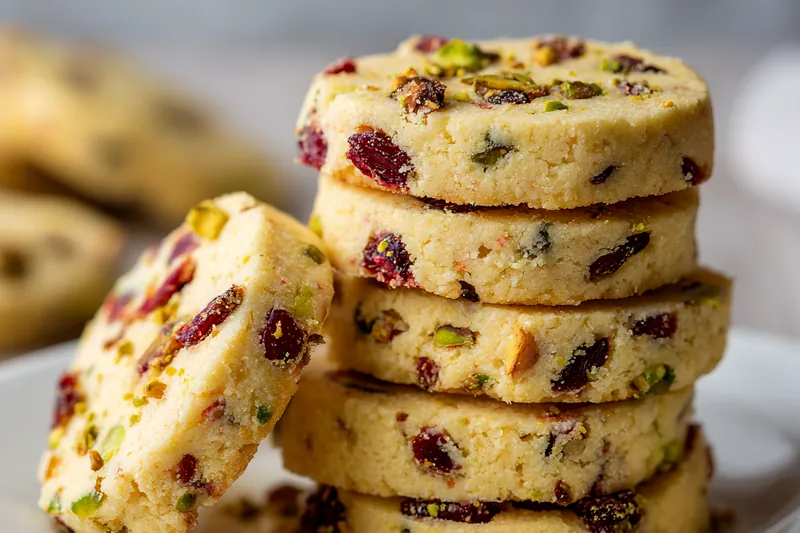
Choosing the Best Ingredients
For the cranberries, look for plump, moist dried cranberries that aren't hard or crystallized. If yours are too dry, soak them in warm water for 10 minutes, then pat dry before chopping. Choose raw, unsalted pistachios for the best flavor—avoid pre-roasted or salted varieties. The bright green color indicates freshness, while browning or dullness suggests they're past their prime. Both cranberries and pistachios should be chopped to roughly the same size so they distribute evenly throughout the dough.
{{section_2_paragraph_2}}
Essential Ingredient Notes
- Butter: Use unsalted butter at cool room temperature—it should be soft enough to leave an indent when pressed but not greasy or melting. Take it out of the fridge 30-45 minutes before baking. If you forgot, cut it into small cubes to speed softening, but never microwave it. European-style butter (like Kerrygold or Plugrá) elevates these cookies significantly.
- Dried Cranberries: Choose cranberries that are still pliable, not rock-hard. Ocean Spray Craisins work well, but check the ingredient list—some brands add less sugar, which affects the final cookie sweetness. Chop them into smaller pieces (about the size of a pea) so you get cranberry flavor in every bite without large chewy chunks that overpower the delicate shortbread.
- Pistachios: Raw, shelled pistachios are ideal—roasting them in advance isn't necessary as they'll develop flavor during baking. Look for bright green nuts without brown spots or rancid smell. Store pistachios in the freezer to keep them fresh. Chop them roughly, leaving some larger pieces for texture and visual appeal. A few pieces with the purple skin still attached adds character.
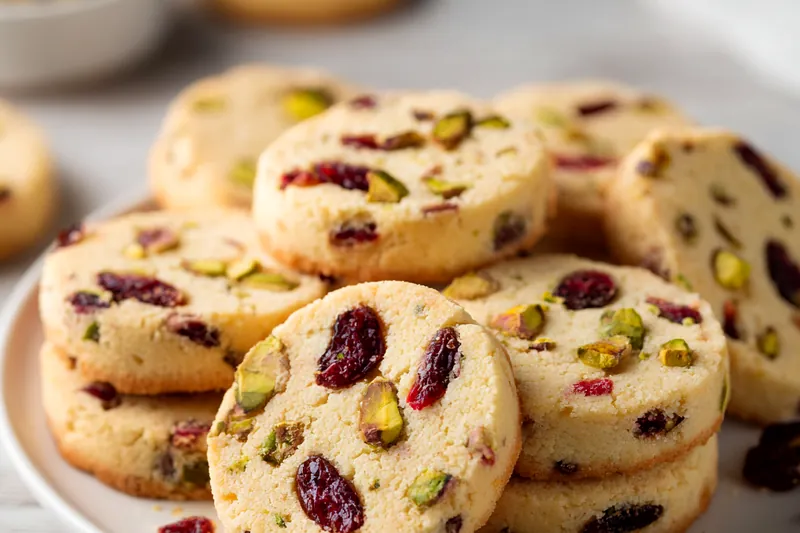
Mastering Shortbread Technique
The technique for perfect shortbread is all about temperature control and gentle handling. When creaming butter and sugar, you want the mixture light and fluffy but not warm—this takes 2-3 minutes with an electric mixer. Once flour is added, mix only until just combined. The dough will look crumbly at first, but resist the urge to keep mixing. When you press it together, it should hold its shape without being overly sticky.
Chilling the dough is non-negotiable for slice-and-bake cookies. A properly chilled log slices cleanly without dragging or squishing the cranberries and pistachios. Use a sharp knife and wipe it clean between slices for the neatest rounds. Bake at the low temperature of 325°F—shortbread needs gentle heat to develop that signature tender texture without browning too much. The cookies will seem slightly underdone when you remove them, but they'll firm up perfectly as they cool.
The Perfect Slice-and-Bake Method
Shape your dough into a uniform log about 2 inches in diameter—use parchment paper to help roll it smoothly. Wrap tightly and chill until very firm (at least 30 minutes, but overnight is even better). When ready to bake, use a sharp chef's knife in a single downward motion to slice—don't saw back and forth. If the log becomes too soft while slicing, return it to the refrigerator. Rotate the log a quarter turn after each slice to prevent flat sides from developing.
Buttery Cranberry Pistachio Shortbread Cookies
📋 Ingredients
Dry Ingredients
- 1 cup (226g) unsalted butter, softenedShould be cool room temperature, not melted—soft enough to cream but still holds shape
- ½ cup (100g) granulated sugarWhite granulated sugar works best; superfine dissolves even more smoothly
- 1 teaspoon pure vanilla extractUse pure vanilla, not imitation, for best flavor
- ¼ teaspoon fine sea saltEnhances butter flavor and balances sweetness
Mix-ins
- 2 cups (250g) all-purpose flourSpoon and level—don't pack the measuring cup
- ½ cup (60g) dried cranberries, choppedChop into small pieces for better distribution throughout cookies
- ½ cup (65g) raw pistachios, roughly choppedUnsalted, shelled pistachios—chop to varying sizes for texture
- 1 tablespoon coarse sugar for topping (optional)Sanding sugar or turbinado adds sparkle and crunch
Instructions
Cream Butter and Sugar
In a large mixing bowl, beat softened butter and granulated sugar together using an electric mixer on medium speed for 2-3 minutes until light and fluffy. The mixture should be pale and smooth with no sugar grains visible. Scrape down the sides of the bowl as needed.
Add Dry Ingredients and Mix-ins
Mix in vanilla extract briefly. Add flour and salt, mixing on low speed until just combined—the dough will look crumbly but should hold together when pressed. Do not overmix. Gently fold in chopped cranberries and pistachios with a spatula until evenly distributed throughout the dough.
Shape and Chill Dough
Turn dough onto a lightly floured surface and press together into a cohesive mass. Shape into a log approximately 2 inches in diameter and 10 inches long. Wrap tightly in plastic wrap or parchment paper, smoothing the surface. Refrigerate for at least 30 minutes or up to 3 days. The dough must be firm to slice cleanly.
Slice and Prepare for Baking
Preheat oven to 325°F (165°C). Line two baking sheets with parchment paper. Unwrap chilled dough and use a sharp knife to slice into ¼-inch thick rounds, wiping knife clean between cuts. Place cookies on prepared sheets, spacing them 1 inch apart. Sprinkle with coarse sugar if desired.
Bake to Perfection
Bake for 12-15 minutes, rotating pans halfway through, until edges are just beginning to turn golden but centers remain pale. Do not overbake—cookies should still look slightly underdone. Remove from oven and let cool on baking sheet for 5 minutes, then carefully transfer to a wire rack to cool completely. Cookies will firm up as they cool.
Recipe Notes & Tips
Storage
Store cooled cookies in an airtight container at room temperature for up to 1 week. Layer with parchment paper to prevent sticking. Unbaked dough can be refrigerated for 3 days or frozen for up to 3 months. Baked cookies freeze well for up to 2 months—thaw at room temperature.
Serving Suggestions
These cookies are perfect for holiday cookie platters, afternoon tea, or gifting in decorative tins. Serve alongside hot beverages, pair with vanilla ice cream, or include in a dessert cheese board with sharp cheddar and fresh pears. They also make elegant garnishes for parfaits or trifles.
Variations
Try substituting dried cherries for cranberries, or use almonds or pecans instead of pistachios. Add ½ teaspoon almond extract for extra depth. For chocolate lovers, fold in ½ cup mini chocolate chips. You can also add 1 tablespoon orange zest for a citrus twist that complements the cranberries beautifully.